

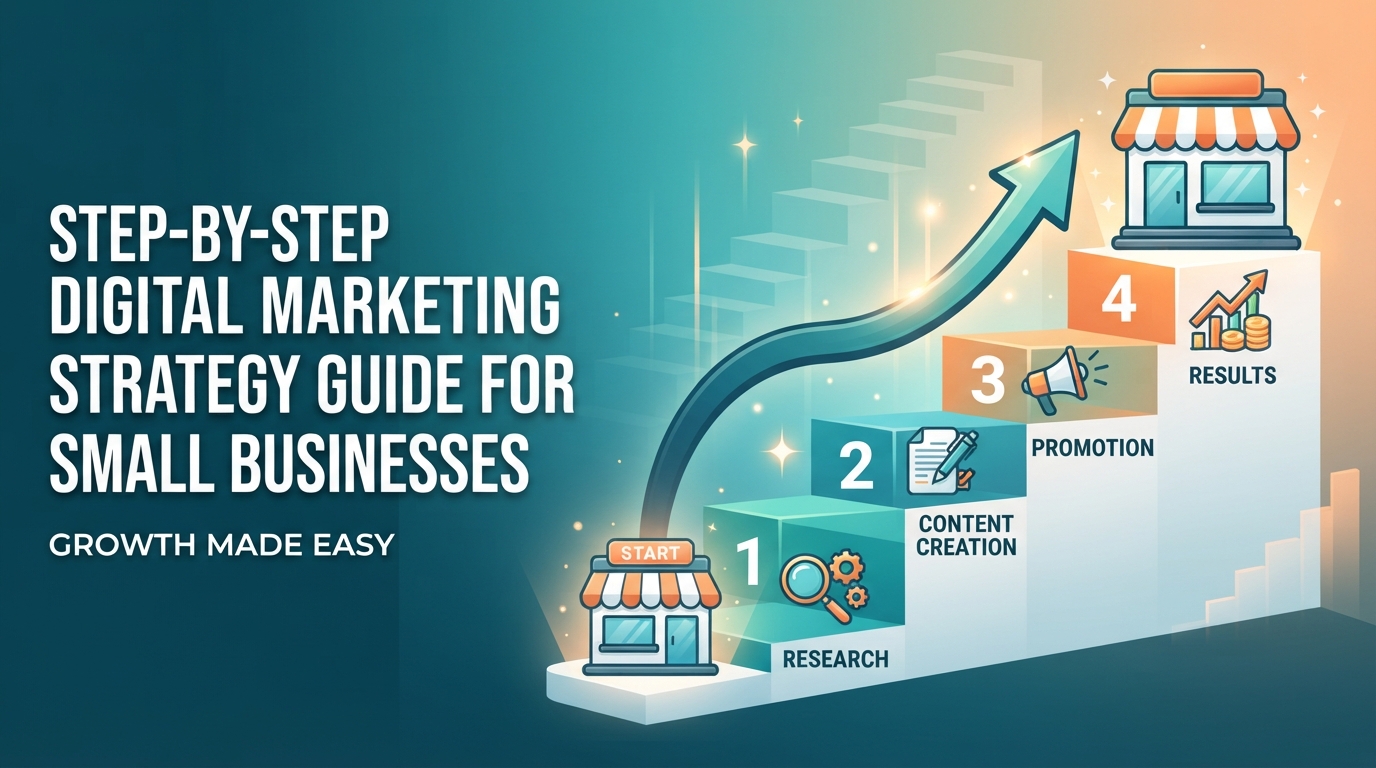
Digital Marketing Strategy: A Step-by-Step Guide for Small Businesses
Running a small business is already a lot of work. You have customers to serve, employees to manage, and daily decisions to make. Marketing can easily become another task on a long list.
The good news is that you do not need to be everywhere online or use every marketing channel at once. You need a clear plan that connects your business goals with the right audience, message, and marketing channels.
A strong digital marketing strategy gives your business that plan. It helps you decide what to do, who to reach, where to reach them, and how to measure whether your efforts are working.
What Is a Digital Marketing Strategy?
A digital marketing strategy is a plan for using online channels to reach potential customers and grow your business.
These channels can include:
- Search engines
- Social media
- Email marketing
- Websites and landing pages
- Online advertising
- Content marketing
- Local SEO
- Video and other digital content
The goal is not simply to get more likes, followers, or website visits. Good marketing should support real business outcomes, such as more calls, leads, appointments, sales, or repeat customers.
For a small business, this is especially important. A focused plan can help you spend your time and budget on activities that have the best chance of producing results.
Step 1: Set Clear Marketing Goals
Before choosing a platform or creating an advertisement, decide what you want your marketing to accomplish.
Your goal might be to:
- Generate more qualified leads
- Increase online sales
- Get more phone calls
- Book more appointments
- Build local awareness
- Increase website traffic
- Grow an email list
- Improve customer retention
Try to make your goals specific.
Instead of saying, "I want more customers," you might set a goal to generate 30 qualified leads per month or increase online bookings by 20%.
Clear goals make it easier to choose the right tactics and measure progress.
Step 2: Understand Your Target Audience
The next step is understanding who you want to reach.
Think about your ideal customer. What problem are they trying to solve? What questions do they ask before buying? What makes them choose one business over another?
You can look at:
- Existing customer information
- Website analytics
- Social media engagement
- Customer reviews
- Sales conversations
- Frequently asked questions
- Competitor websites
The more you understand your audience, the easier it becomes to create useful content and advertising.
Your marketing should speak to the customer's needs rather than simply listing everything your company offers.
Step 3: Build a Strong Website
Your website is often one of the most important parts of your online presence.
A potential customer may discover your business through Google, social media, an advertisement, or a referral. Your website then needs to give them a reason to take the next step.
A strong small-business website should have:
- Clear messaging
- Simple navigation
- Mobile-friendly design
- Fast-loading pages
- Strong calls to action
- Useful service or product information
- Trust signals such as reviews or case studies
- Easy ways to contact your business
Your website should also support your broader marketing efforts. For example, an advertisement should lead visitors to a relevant page instead of simply sending everyone to the homepage.
Step 4: Choose the Right Marketing Channels
You do not need to use every online platform.
Choose channels based on where your customers spend time and how they search for solutions.
Search Engine Optimization
SEO can help your website appear when people search for products, services, or answers related to your business. Local businesses can also focus on searches that include their city or service area.
SEO can take time, but it can become a valuable source of long-term traffic.
Social Media Marketing
Social media can help businesses build awareness, show their personality, educate customers, and stay connected with their audience.
The best platform depends on your business and audience. Focus on creating useful and engaging content instead of posting simply to fill a content calendar.
Paid Advertising
Paid advertising can help you reach potential customers more quickly.
Platforms such as Google and Meta allow businesses to target audiences based on factors such as search intent, interests, demographics, and online behavior.
However, successful advertising requires more than launching a campaign. Your targeting, creative, offer, landing page, tracking, and follow-up all need to work together.
Step 5: Create a Marketing Funnel
Not every person who discovers your business is ready to buy immediately.
That is why a marketing funnel strategy can be useful.
A simple funnel may include three stages:
Awareness
At this stage, people are learning about your business or discovering that they have a problem you can solve.
Helpful content can include educational videos, social posts, blog articles, and introductory ads.
Consideration
Now the customer is comparing options and looking for more information.
Testimonials, case studies, service pages, FAQs, comparison content, and detailed guides can help build trust.
Conversion
The customer is ready to take action.
Make the next step easy. Depending on your business, this could be booking an appointment, requesting a quote, calling your company, signing up, or making a purchase.
A well-planned funnel helps move people from awareness to action instead of treating every visitor as if they are ready to buy.
Step 6: Create Useful Content
Content marketing can support almost every part of your online presence.
You can create:
- Blog articles
- Short-form videos
- Social media posts
- Guides
- Case studies
- Customer stories
- FAQs
- Educational emails
The key is to create content that answers real customer questions.
For example, a local home service company could publish content about common repair problems, pricing factors, maintenance tips, and what customers should look for when choosing a service provider.
Useful content can build trust before someone ever speaks with your sales team.
Step 7: Track Your Results
A marketing plan should be measurable.
Depending on your goals, you may want to track:
- Website traffic
- Leads
- Phone calls
- Form submissions
- Bookings
- Sales
- Cost per lead
- Conversion rate
- Return on ad spend
- Customer acquisition cost
Do not focus on one number alone.
For example, a campaign may generate thousands of website visits but very few leads. Another campaign may bring fewer visitors but produce customers at a much better rate.
Look at the full customer journey.
Step 8: Test and Improve
Your first marketing plan does not have to be perfect.
Digital marketing gives businesses the opportunity to test different ideas and learn from the results.
You can test:
- Headlines
- Images and videos
- Ad copy
- Offers
- Landing pages
- Calls to action
- Audience segments
- Content topics
Review your results regularly and make changes based on data.
This process turns marketing from guesswork into an ongoing system for improvement.
How Friday Marketing Can Help Small Businesses
Building and managing all of these pieces can be difficult when you are also running a business.
Friday Marketing Agency combines data, creativity, and technology to help businesses grow online. Its services include ads management, content creation, social media marketing, and website design and development. The agency also highlights strategy, targeting, creative development, reporting, content production, and conversion-focused web development as part of its work.
Friday has worked on more than 90 projects globally and reports 300K+ monthly visits to websites it has built, along with 1M+ monthly social media views.
For a small business that needs help bringing these pieces together, working with a team experienced in Glendale digital marketing management can make the process easier to manage.
Ready to Build a Better Marketing Plan?
Your business does not need a complicated marketing plan. It needs a clear strategy built around your customers, goals, and available resources.
Friday Marketing can help bring together strategy, creative content, paid advertising, social media, and website development so your marketing efforts work toward the same goal. If you are looking for a digital marketing agency Glendale businesses can turn to for a more complete approach, Friday Marketing offers a range of services designed around business growth.
The next step is simple: identify your biggest growth goal, understand your audience, choose the right channels, and start measuring what happens.
Frequently Asked Questions
What is a digital marketing strategy for a small business?
It is a plan that explains how a business will use online channels to reach its target audience, generate leads, build awareness, and increase sales or other business results.
How much does digital marketing cost for a small business?
There is no single price. Cost depends on factors such as your goals, industry, competition, advertising budget, website needs, and the amount of marketing support you need.
Which digital marketing channel is best for small businesses?
There is no universal best channel. SEO, social media, email, paid advertising, and content marketing can all work. The right choice depends on your customers and business goals.
How long does digital marketing take to produce results?
It depends on the channel. Paid advertising can generate results relatively quickly, while SEO and content marketing often take longer to build. Consistent testing and measurement are important for both.
Do small businesses need a marketing funnel?
A funnel can help small businesses understand how customers move from discovering a brand to making a purchase. It can also help identify where potential customers are dropping off.
Should a small business hire a digital marketing agency?
Hiring an agency can make sense when a business needs expertise, consistent marketing management, creative support, advertising help, or a complete strategy but does not have the resources to handle everything internally.
How do I know if my marketing is working?
Track metrics connected to your business goals. Leads, sales, bookings, calls, conversion rates, customer acquisition costs, and return on ad spend are often more useful than vanity metrics alone.


