

Why Nike’s Marketing Feels Different
It builds something people want to be part of
Nike is often discussed as a sportswear company, but in reality, it operates on a very different level. It is not simply selling shoes or apparel. It is shaping how people see themselves.
At Friday Marketing Agency, we spent time closely reviewing Nike’s campaigns, messaging, and positioning across different channels. The goal was simple: understand what actually makes their marketing work so consistently.
What stood out was not just creativity. It was clarity, discipline, and a deep understanding of human behavior.
Here are the key lessons.
1. Personalization makes the product feel like it already belongs to you
One of Nike’s strongest approaches is making the customer feel involved before the purchase even happens.
Campaigns that focus on customization do not present a finished product. Instead, they present a starting point. The user is invited to take part in the process.
This shifts the mindset completely.
The product is no longer something created by a brand. It becomes something shaped by the customer. That small shift creates a stronger emotional connection and a higher sense of ownership.
People are naturally more attached to what feels personal. Nike builds on that instinct very effectively.
2. The focus is always on lifestyle, not the item itself
Nike rarely talks about features first. Instead, it shows a way of living.
Whether it is running, training, or even golf, the message is never just about performance. It is about identity.
The visuals, tone, and messaging place the customer inside a world. A world where they are confident, active, and part of something bigger.
This approach works because people do not buy products for technical reasons alone. They buy how those products make them feel.
Nike understands that feeling is the real product.
3. Owning the customer relationship matters more than a single sale
Another important strategy is how Nike promotes its app and digital ecosystem.
The goal is not just conversion. It is a connection.
When a customer downloads the app, the relationship changes. It becomes direct, ongoing, and personalized. Preferences, habits, and behavior all help shape future interactions.
This allows Nike to move beyond one-time transactions and build long-term engagement.
Instead of selling once, they create a system where the customer keeps coming back naturally.
4. Brand recognition comes before any offer or benefit
Nike’s messaging is structured in a very intentional way.
The brand is always introduced first. The tone, the identity, and the presence come before any practical reason to buy.
Only after that does the message move into details like collections, offers, or categories.
This works because strong brands do not rely on explanations. They rely on recognition.
When people already trust and understand the brand, the decision process becomes much faster and simpler.
5. Giving people choice increases connection
Nike often presents multiple variations of the same product instead of pushing a single option.
This creates a different kind of experience.
The focus is no longer on choosing between brands. It becomes about choosing what feels right personally.
That sense of freedom allows customers to express themselves through the product, rather than just consume it.
And when people feel represented, they are more likely to stay loyal.
6. Simplicity makes the message stronger
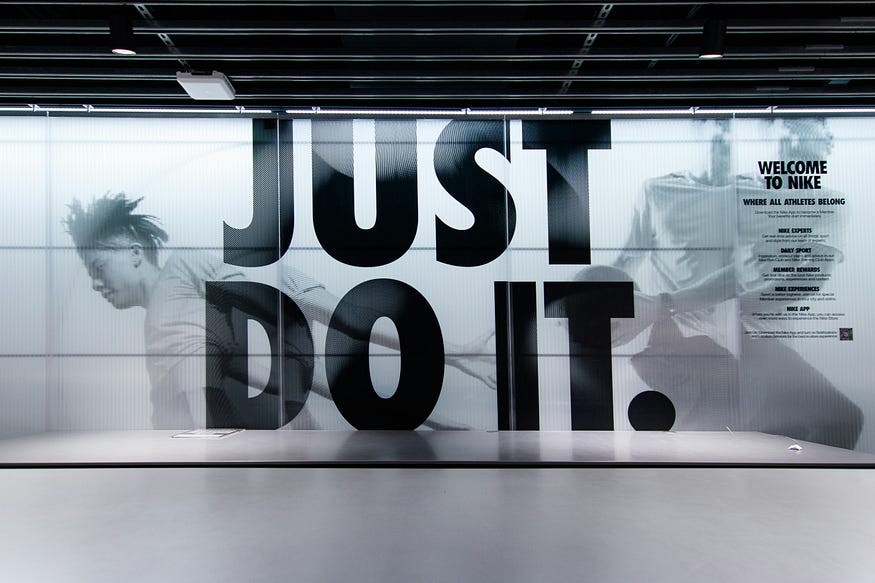
One of the most consistent patterns across Nike’s campaigns is simplicity.
The visuals are clean. The messaging is direct. Nothing feels overloaded.
This is not accidental.
Simple communication is easier to understand, easier to remember, and more effective in fast-moving environments like social media.
While many brands try to say more, Nike focuses on saying less, but with more impact.
7. Strong messages are sometimes exaggerated on purpose
Not every message needs to be subtle.
Nike occasionally pushes ideas to an extreme to make them more noticeable. Comfort becomes ultra comfort. Energy becomes intensity. Expression becomes bold identity.
This kind of exaggeration helps the message stand out and stay memorable.
In crowded spaces, clarity alone is not always enough. Sometimes the message needs to be amplified to be remembered.
8. The right words can carry an entire campaign
Nike often relies on very short phrases to communicate big ideas.
Words like “new” or “exclusive” are simple, but they create immediate interest. They suggest value, rarity, and relevance without needing long explanations.
This shows that strong copy is not about complexity. It is about choosing words that trigger the right reaction instantly.
Written by Friday Marketing Agency✦
We appreciate your time. If you found value here, feel free to leave a 👏 and stay connected with us on LinkedIn, and X.


