

Why Dental Ads Fail - Elite Dental Clinic Case Study
A real case study of how we built a system that connects advertising, trust, and patient behavior into actual clinic visits.
When we started working with Elite Dental Group, our initial focus was not campaign execution, but market and behavioral analysis.
In healthcare performance marketing, especially in dentistry, surface-level KPIs like impressions or even CPL are misleading if they are not connected to actual patient conversion outcomes.
Dental decision-making operates on a delayed conversion cycle, where trust, perceived authority, and emotional safety play a significantly larger role than direct response triggers.
So instead of immediately activating acquisition campaigns, we first mapped out the full patient journey lifecycle — from awareness to consultation booking.
Dental marketing is not direct response — it is trust-based funnel engineering
Very early in the strategy development phase, we identified a key insight:
Dental services operate within a high-consideration, high-trust, and emotionally sensitive decision framework.
Unlike transactional industries, patients do not convert based on urgency alone. They move through stages of:
- Awareness
- Evaluation
- Trust validation
- And finally conversion
This meant the strategy had to be structured as a multi-layered funnel system, rather than isolated campaigns.
Meta Ads became our upper-funnel trust and awareness layer
We initiated the acquisition strategy through Meta platforms, with a clear objective: build brand familiarity and pre-intent conditioning.
Initial tests included standard service-based creatives and clinic positioning assets. However, early performance data indicated weak emotional resonance and limited impact on retention.
This led to a strategic pivot toward authority-driven creative direction, where we shifted focus from the clinic as an entity to the medical professional as the trust anchor.
This was a critical optimization point.
The strategic shift: from clinic branding to doctor-led authority positioning
Once we repositioned creative strategy around the doctor as the primary trust signal, we observed a significant improvement in:
- Engagement quality
- CTR stability
- And downstream conversion intent
This aligns with a core principle in healthcare marketing: authority perception outperforms brand messaging.
Patients are not selecting institutions — they are selecting perceived expertise and human credibility.
This shift effectively increased the trust-to-action ratio across the funnel.
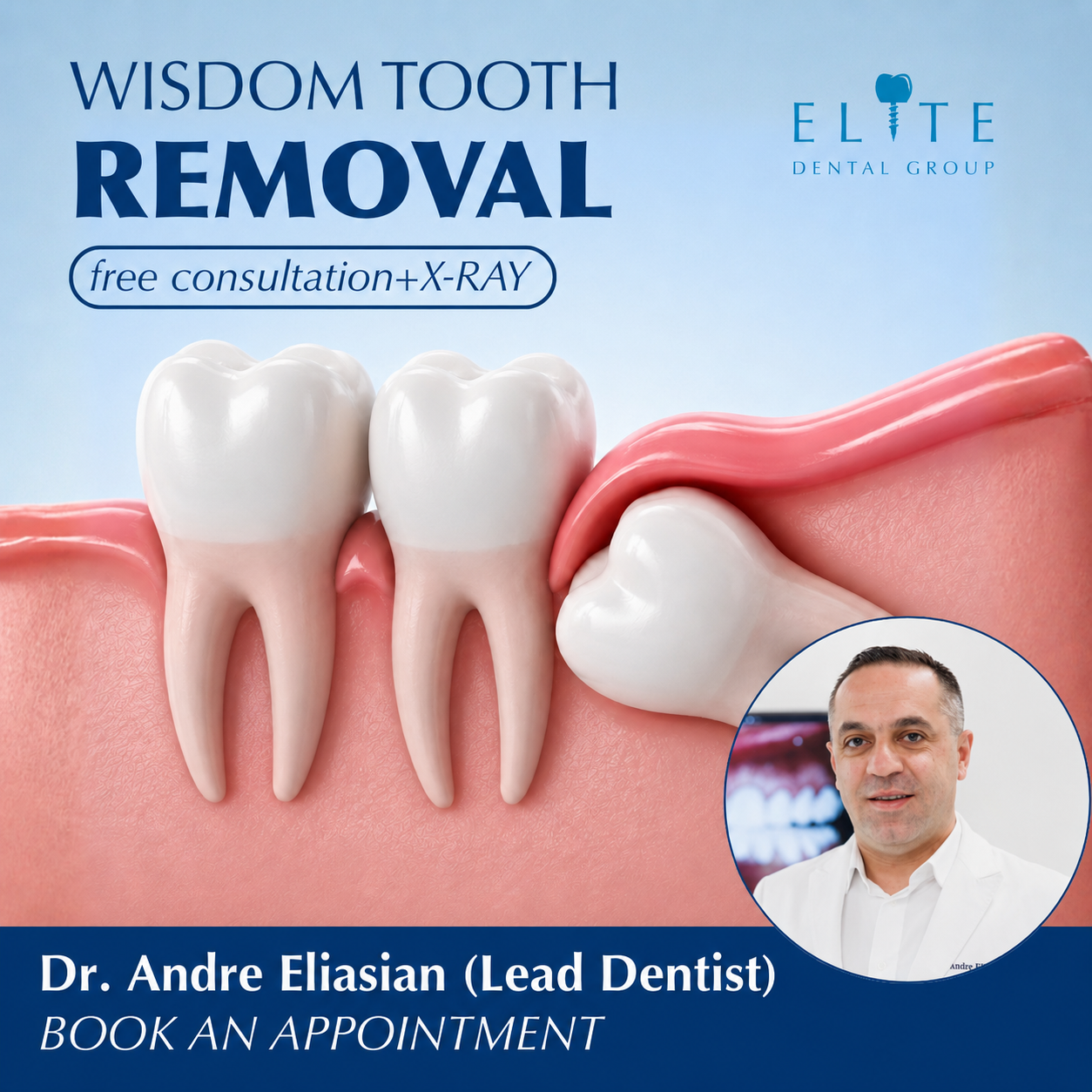
Conversion architecture: landing pages designed for single-action optimization
To support Meta traffic, we implemented dedicated conversion-optimized landing pages designed with one objective: to minimize friction in booking consultations.
Each landing page was structured around:
- Focused messaging hierarchy
- Reduced cognitive load
- Clear CTA pathways
- Trust reinforcement elements
Additionally, we deployed localized multilingual funnel segmentation, introducing Spanish-language landing pages and campaigns to expand demographic reach and improve cultural relevance.
This allowed us to increase both lead quality and conversion rate efficiency.
Google Ads introduced high-intent demand capture into the system
Once upper-funnel awareness was stabilized through Meta, we activated Google Ads as a high-intent acquisition channel targeting users already in active search behavior.
Unlike Meta, where demand is created, Google functions as a demand capture engine.
Here, we observed a clear performance pattern: wisdom tooth removal services significantly outperformed other offerings in terms of conversion velocity and call volume.
This was driven by urgency-based search intent, where users bypass evaluation cycles and move directly into action.
We therefore restructured campaigns to prioritize:
- High-intent keywords
- Call-driven ad extensions
- Immediate conversion pathways
Performance insight: urgency-driven services outperform consideration-based procedures
One of the most important learnings from campaign data was the behavioral difference between treatment categories.
Urgency-based services (such as wisdom tooth removal) demonstrated:
- Higher CTR
- Faster conversion cycles
- Stronger call-to-appointment rates
While high-value procedures like implants require longer nurturing cycles through remarketing and awareness sequencing.
This allowed us to segment campaigns into:
- Immediate conversion verticals (Google Ads)
- Long-term trust-building funnels (Meta Ads)
Scaling methodology: controlled budget expansion for algorithm stabilization
Once initial performance benchmarks were validated, we implemented a gradual scaling framework rather than aggressive budget expansion.
Budgets were scaled progressively:
$5,000 → $6,000 → $8,500
This approach ensured:
- Algorithmic learning stability
- Reduced performance volatility
- Improved cost efficiency over time
Scaling was treated as a performance optimization process, not a volume increase exercise.
The real KPI was not leads — it was show-up rate and treatment progression
While lead generation was the initial output metric, the primary success indicator became patient show-up rate and consultation-to-treatment progression.
On average:
- 20 registered leads
- ~12 attended consultations
This conversion ratio provided a more accurate representation of funnel efficiency than standard CPL-based reporting.

The downstream result was strong alignment with high-value procedures such as:
- All-on-4
- All-on-6
- All-on-X
Final system architecture: an integrated full-funnel acquisition model
Ultimately, the campaign evolved into a multi-layered patient acquisition ecosystem, where each channel served a distinct function:
- Meta Ads → awareness and trust conditioning
- Google Ads → high-intent demand capture
- Landing Pages → conversion optimization layer
- Doctor-led creatives → authority reinforcement
- Multilingual funnels → market expansion
The system worked not because of a single channel, but because of cross-channel synchronization across the entire patient journey.
Final reflection: performance marketing in healthcare is not about traffic — it is about trust engineering
In healthcare acquisition, success is not defined by ad performance alone, but by the ability to systematically move users from uncertainty to trust, and from trust to action.
Once that framework is correctly engineered, advertising stops being "ads" and becomes a predictable patient acquisition system.
Ready to build your own patient acquisition system? Book a free consultation


