

What Is Generative Engine Optimization (GEO)? A Plain-English Guide for 2026
Introduction
Generative engine optimization (GEO) is the practice of structuring your content so AI tools — ChatGPT, Gemini, Claude, Perplexity, and Google's AI Overviews — cite your brand when they answer people's questions. In plain terms: SEO helps you rank a link, while GEO helps you become the answer.
That shift matters because search is changing quickly. Around 43% of Google searches now end without a click, and inside Google's AI Mode that figure climbs to roughly 93% (industry data, 2026). If your customers are getting answers straight from an AI, being absent from those answers is a real problem — and a real opportunity.
This guide explains what GEO is, how it differs from SEO, why it matters now, and how a business in Beverly Hills, Glendale, or anywhere in Southern California can start today.
What Is Generative Engine Optimization?
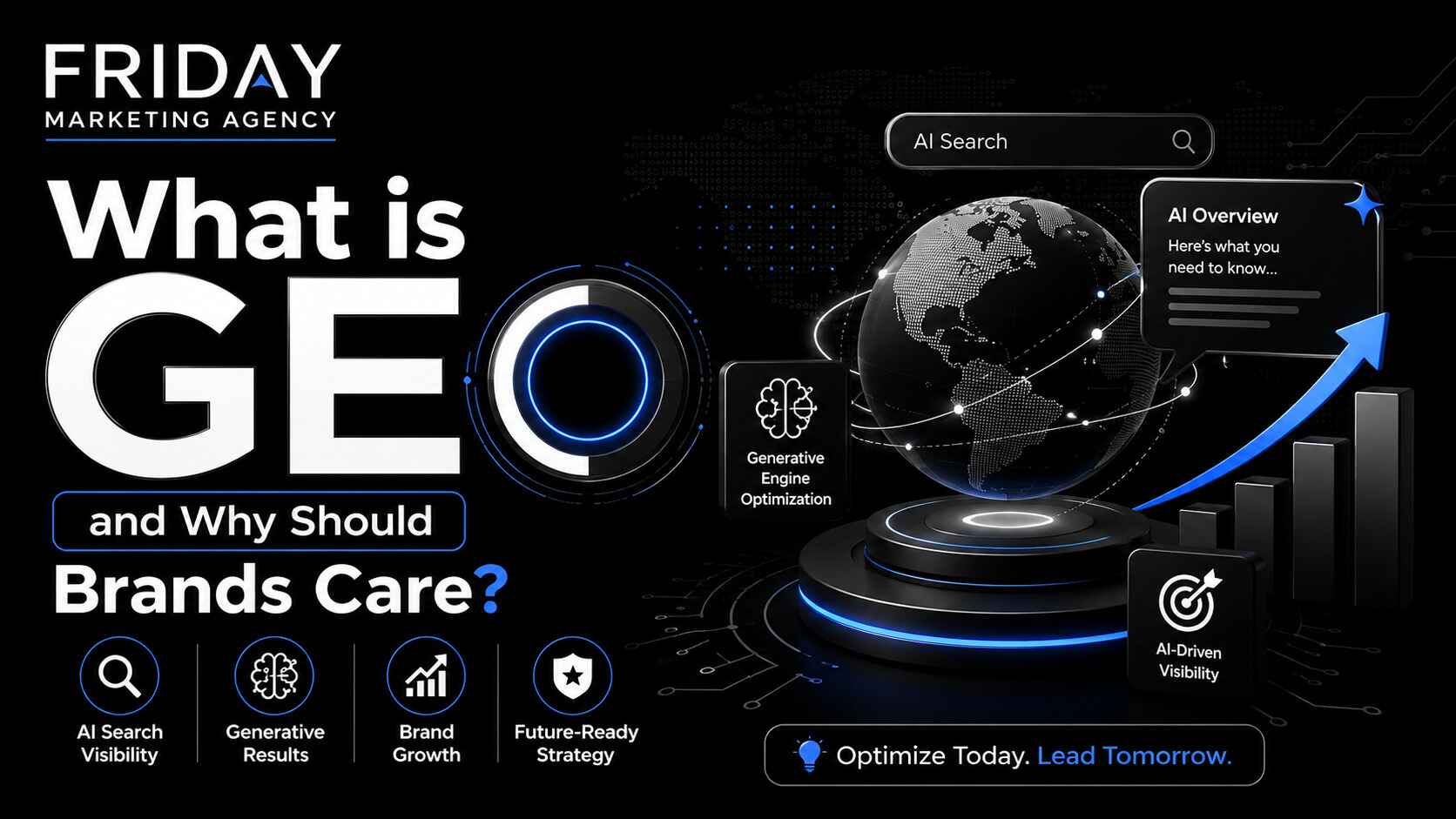
GEO is the process of making your content easy for AI engines to find, understand, trust, and quote. Researchers at Princeton, Georgia Tech, and IIT Delhi formally defined the term in a 2024 paper presented at the ACM SIGKDD conference, where they showed specific techniques could lift a page's visibility in AI answers by up to 40%.
The core idea is simple. Generative engines don't just list ten blue links. They gather information from several sources, summarize it, and present one answer — often with citations. GEO is how you earn a place among those cited sources.
GEO vs SEO: What's the Difference?
They share the same DNA but aim at different targets.
SEO and GEO share the same fundamentals but aim at different targets. SEO's goal is to rank a page; GEO's is to get cited inside an AI answer. With SEO, success looks like clicks and rankings — with GEO, it's mentions and citations. And where SEO shows up in search results, GEO shows up inside ChatGPT, Gemini, and Google's AI Overviews.
Here's a common misconception worth clearing up: GEO is not replacing SEO. Strong SEO fundamentals — quality content, clean structure, authority — are exactly what feed good GEO results. The smart 2026 play is to do both. For a deeper look, see what's working in SEO right now.
Why GEO Matters Right Now
AI search is no longer experimental. ChatGPT reached hundreds of millions of weekly users by early 2026, and Google's AI Overviews now reach a massive audience every month — part of the new search reality reshaping how brands stay visible.
There's a quieter benefit, too. Visitors who arrive through an AI citation tend to convert at higher rates than typical organic visitors (Ahrefs, 2025) — the AI has already filtered the options for them. The volume is small for now, but the intent is strong.
How to Optimize for Generative Engines
You don't need an enterprise budget. A few high-impact moves do most of the work:
- Lead with the answer. Put a clear, direct answer in your first sentence and under each heading. AI engines pull passages, not whole pages.
- Back claims with data. Adding relevant statistics and citing credible sources were the two highest-performing tactics in the Princeton study.
- Structure for scanning. Use descriptive headings, short paragraphs, lists, tables, and an FAQ.
- Show your expertise. Name your authors, link to your sources, and keep content fresh.
- Stay crawlable. Make sure AI bots can reach and index your pages — a page no engine can read can't be cited. If your site isn't surfacing at all, start with why your website isn't showing up.
Need help putting this into practice? See our AI SEO services.
Good News for Small and Local Businesses
This is the part most guides skip. The Princeton research found that lower-ranked pages gain the most from GEO — a page sitting around position five saw a 115% jump in visibility after adding citations, while pages already ranking first barely moved.
For a small team in Beverly Hills or Glendale that isn't outranking national agencies yet, that's encouraging. Clear, well-sourced, useful content can punch well above its authority in AI answers. We explored this shift further in how brands stay visible in the age of AI.
FAQ
Is GEO replacing SEO?
No. GEO extends SEO. Most traffic still comes from traditional search, and SEO foundations directly support AI visibility.
Which AI platforms should I focus on?
Start where your audience is. ChatGPT has the largest share, but Google's AI Overviews and AI Mode reach the widest audience.
How do I measure GEO?
Not by rankings. Track how often AI tools mention or cite your brand, and watch for AI-referred visits in your analytics. Asking ChatGPT or Perplexity your target questions and noting who appears is a free place to start.
Can a small business really do GEO?
Yes. Smaller sites often benefit more, since useful, well-structured content can earn citations even without top rankings.
Conclusion
Generative engine optimization is about being the answer, not just a link. As more people get information directly from AI, the brands that appear inside those answers win attention the rest can't reach.
The encouraging part: GEO rewards clarity, evidence, and helpfulness — and smaller businesses can compete. Start with one important page: lead with a direct answer, back it with data, and make sure AI engines can read it.
How Friday Marketing Agency Can Help
At Friday Marketing Agency, we help Southern California businesses stay visible as search evolves — across Google and the new wave of AI answer engines. From technical SEO and content marketing to GEO strategy, PPC, and lead generation, we focus on the work that moves the needle for growing brands.
If you're wondering whether your business shows up when someone asks ChatGPT or Gemini for a recommendation, we can help you find out — and fix it.
📍Friday Marketing Agency is based in Glendale, helping businesses locally and beyond build strategies that work in today’s fast-moving digital world.


