

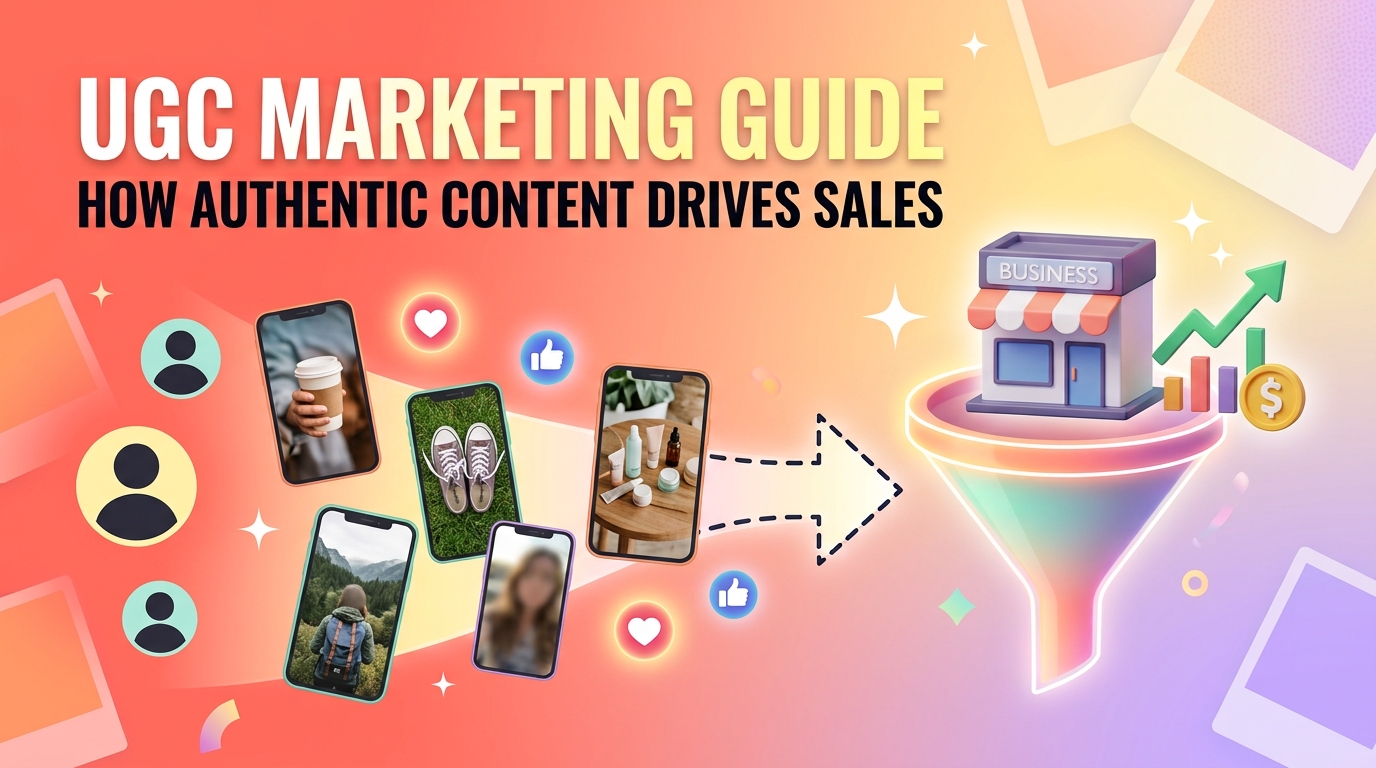
UGC Content Creation: How Brands Can Turn Authentic Customer Content Into Marketing Results
People don't always want to hear a brand explain why its product is great.
They often want to see how real customers use it.
That is one reason user-generated content, or UGC, has become an important part of modern content marketing. Customer videos, product demonstrations, testimonials, reviews, unboxings, and social posts can provide a more relatable perspective than traditional branded advertising.
But simply collecting customer content isn't enough.
Effective UGC content creation requires a strategy for finding useful content, getting permission to use it, organizing it, adapting it for different platforms, and connecting it to a marketing objective.
When handled properly, UGC can become more than social media content. It can support awareness, engagement, paid advertising, product education, and conversions.
What Is UGC Content Creation?
UGC content creation is the process of producing, collecting, organizing, or adapting content created by customers, users, creators, or members of a brand's community.
Examples include:
- Customer testimonial videos
- Product reviews
- Unboxing videos
- Before-and-after content
- Product demonstrations
- Social media posts
- Customer photos
- Short-form videos
- Creator-style product content
The key characteristic is that the content feels connected to a real user experience rather than coming entirely from the brand itself.
UGC can be organic, meaning customers create and publish it independently, or it can be intentionally commissioned from customers or creators.
Why Does UGC Work?
Trust is one of the biggest reasons brands use UGC.
A potential customer may be skeptical of a polished advertisement because they know the brand created it to sell something.
A customer demonstrating the same product in a real environment can provide a different perspective.
UGC can also show things traditional product photography cannot.
For example, a customer video can demonstrate:
- How a product looks in everyday use
- How quickly someone can use it
- What the experience feels like
- How a product solves a particular problem
- What customers actually like about it
This makes UGC particularly useful when potential customers need more confidence before making a decision.
7 Types of UGC Brands Can Create
Not every business needs the same type of customer content.
1. Customer Testimonials
Ask customers to explain what problem they had, how they used your product or service, and what changed afterward.
Specific experiences are generally more useful than generic praise.
2. Product Demonstrations
A customer can show how they use a product in their everyday routine.
This can make complicated features easier to understand.
3. Unboxing Content
Unboxing videos can showcase packaging, presentation, product details, and the customer's first impression.
4. Before-and-After Content
Where appropriate, before-and-after content can demonstrate a visible outcome.
It works particularly well when the transformation can be clearly shown.
5. Reviews
Written or video reviews can answer questions potential customers may have before purchasing.
6. How-To Content
Customers can demonstrate practical ways to use a product.
This type of content can have value beyond promotion because it can also educate existing customers.
7. Lifestyle Content
Instead of focusing entirely on product features, lifestyle UGC shows how the product fits into a customer's daily life.
This can help potential customers imagine themselves using it.
UGC vs. Influencer Content
UGC and influencer marketing are related, but they aren't identical.
An influencer generally creates content for an audience they have built and may promote a product to that audience.
UGC can focus more heavily on the content itself.
A creator may produce a UGC-style video for a brand without publishing it to a large personal audience.
That distinction can be valuable for businesses.
A brand doesn't necessarily need a creator with hundreds of thousands of followers to obtain useful content.
It may need someone who can communicate the product naturally and create content that fits the brand's audience.
How UGC Management Fits Into the Strategy
Creating UGC is only one part of the process.
UGC management involves organizing and managing the content so it can actually be used effectively.
A basic UGC workflow can include:
- Identify the type of content you need.
- Find customers or creators who can produce it.
- Provide clear content requirements.
- Collect submissions.
- Review content quality.
- Obtain appropriate usage permissions.
- Organize approved assets.
- Adapt content for different channels.
- Publish or use the content in campaigns.
- Measure performance.
Without a process, businesses can end up with dozens of videos but no clear idea where, when, or how to use them.
How to Create Better UGC
Good UGC doesn't necessarily need expensive production.
In many cases, overly polished content can lose some of the authenticity that makes UGC valuable.
Instead, focus on clear communication.
Give creators a clear brief
Explain:
- What the product is
- Who it helps
- What message matters
- What points should be demonstrated
- What action viewers should take
But avoid scripting every word.
Creators should have enough freedom to communicate naturally.
Focus on the first few seconds
Short-form content needs to establish relevance quickly.
A strong opening might introduce:
- A problem
- A surprising result
- A product benefit
- A common mistake
- A customer experience
The viewer should quickly understand why the content is worth watching.
Show rather than tell
If the product can be demonstrated, demonstrate it.
Visual proof can communicate more effectively than a long explanation.
Where Can Brands Use UGC?
UGC doesn't have to stay on Instagram or TikTok.
Brands can repurpose approved content across multiple marketing channels.
Social media
Short videos can be adapted for Reels, TikTok, Shorts, Stories, and other social formats.
Paid advertising
UGC-style creative can provide an alternative to highly polished advertising creative.
A customer-focused video can introduce a product, demonstrate a benefit, or address a common objection.
Website
Testimonials and customer videos can strengthen product and service pages.
Email marketing
A short customer story can provide useful social proof in an email campaign.
Product pages
Reviews, demonstrations, and customer photos can help potential buyers understand the product before purchasing.
The key is to adapt the content to the platform instead of simply posting the same asset everywhere.
How UGC Supports Content Marketing
UGC can also strengthen a broader content strategy.
Instead of constantly creating brand-generated content from scratch, businesses can combine:
Brand-created content
with
Customer-created content
and
Creator-generated content
This creates a more varied content ecosystem.
For example, a brand could publish an educational post explaining a product feature, followed by a customer video showing that feature in real use.
The first piece explains.
The second demonstrates.
Together, they can create a stronger customer journey.
Measuring UGC Performance
Creating a large amount of UGC doesn't automatically mean your strategy is successful.
Track performance based on the objective.
For awareness, monitor:
- Reach
- Impressions
- Video views
For engagement, monitor:
- Comments
- Shares
- Saves
- Engagement rate
For traffic, monitor:
- Link clicks
- Website sessions
For conversions, monitor:
- Leads
- Purchases
- Sign-ups
- Revenue
You can then identify which content formats, messages, and creators produce the strongest results.
Common UGC Mistakes to Avoid
Creating content without a purpose
Every asset should have a reason for existing.
Choosing authenticity over quality completely
Authentic doesn't mean careless.
Videos should still be understandable, relevant, and appropriate for the brand.
Giving creators too much control
Creators need creative freedom, but they should also understand the campaign objective and important brand requirements.
Giving creators too little freedom
A video that sounds like a corporate advertisement may lose the natural style that makes UGC effective.
Ignoring usage rights
Before republishing or using customer-created content commercially, make sure you have the appropriate permission and rights.
Using the same content everywhere
A TikTok-style video may need editing before being used in an email, website, or paid campaign.
When Should a Brand Invest in UGC?
UGC can be particularly useful when a business:
- Needs more social proof
- Has an active customer community
- Wants more short-form video
- Needs new advertising creative
- Has products that are easy to demonstrate
- Wants to make its brand feel more relatable
- Needs more content without relying entirely on studio production
However, UGC should complement your broader content strategy rather than replace every other form of content.
Need Content Creation Support in Beverly Hills?
Businesses looking to turn customer experiences into professional marketing assets can work with Friday Marketing Agency for content strategy and production support. The agency helps businesses in Glendale and Beverly Hills develop content designed around their audience, brand, platforms, and marketing goals.
Conclusion
UGC content creation gives brands a way to turn real customer experiences into useful marketing assets.
The strongest UGC isn't simply content that looks casual.
It is content that feels authentic while still serving a clear purpose.
Brands should identify the type of customer content they need, create a repeatable process for collecting and managing it, obtain the necessary permissions, adapt assets for different channels, and measure what actually produces results.
When customer experiences become part of the content strategy, brands can create marketing that feels more relatable while building a stronger connection between products and the people who use them.
Frequently Asked Questions
What is UGC content creation?
UGC content creation is the process of producing, collecting, organizing, or adapting content created by customers, users, or creators for marketing purposes.
What is UGC management?
UGC management involves finding, collecting, reviewing, organizing, obtaining permissions for, and distributing user-generated content across appropriate marketing channels.
Is UGC the same as influencer marketing?
No. Influencer marketing usually involves creators promoting products to their established audiences. UGC can focus primarily on producing useful content for a brand, even when the creator does not have a large following.
Can UGC be used in paid advertising?
Yes. Approved customer or creator content can be adapted for advertising when the brand has the appropriate rights and permissions to use it.
How much does UGC content creation cost?
Costs vary depending on the creator, number of assets, production requirements, usage rights, and campaign scope. Simple creator content can require less production investment than professionally produced commercial content.
What makes UGC effective?
Effective UGC is authentic, relevant, easy to understand, and connected to a specific marketing objective. It should feel natural while still communicating a useful message.


