

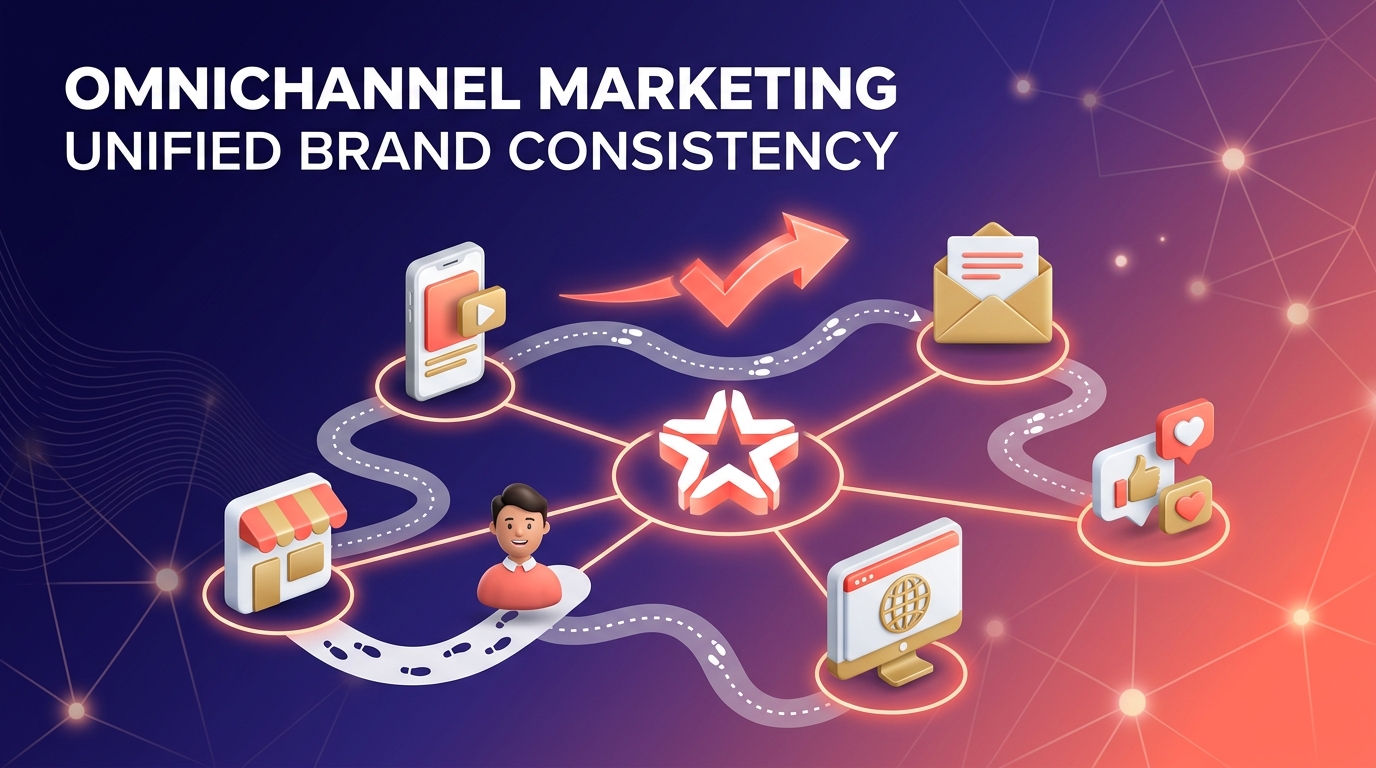
One Brand, Multiple Channels: How Omnichannel Marketing Creates a Better Customer Journey
A customer rarely follows a straight path from discovering a business to becoming a customer.
They might see an Instagram post in the morning, search for the company on Google later, visit the website from their phone, watch a video that evening, and finally contact the business after seeing a retargeting ad a few days later.
Each interaction is part of the same customer journey.
The problem is that many businesses treat these channels as separate activities.
Social media has one message. Paid ads have another. The website tells a different story. Email campaigns may follow a completely different approach.
Omnichannel marketing businesses use a different approach. Instead of treating every channel as an isolated marketing activity, it connects the customer experience across channels.
The result can be a journey that feels more consistent, relevant, and easier to follow.
What Is Omnichannel Marketing?
Omnichannel marketing is a strategy that connects multiple marketing channels so customers receive a more consistent experience as they move between them.
Those channels might include:
- Google Search
- Social media
- Paid advertising
- Your website
- Mobile experiences
- Video
- Content marketing
- In-store interactions
- Direct communication
The important part is not simply being present on many platforms.
It is making those platforms work together.
For example, someone might discover your brand through Instagram, visit your website through Google, sign up for an email, and later return through a paid ad.
With an omnichannel approach, each interaction supports the next step rather than feeling like a completely separate campaign.
Omnichannel vs. Multichannel Marketing
These terms are often used interchangeably, but there is an important difference.
What is multichannel marketing?
Multichannel marketing means using multiple channels to reach customers.
A business might run:
- Google Ads
- Facebook Ads
- Email marketing
- SEO
- Content marketing
Each channel may have its own campaign, audience, and performance metrics.
The channels exist together, but they do not necessarily share a connected strategy.
What is omnichannel marketing?
Omnichannel marketing connects those channels around the customer.
Instead of asking:
“How do we market on Facebook?”
You ask:
“What does this customer need at this stage of their journey, and which channel can help them next?”
That shift is important.
Multi-channel marketing Beverly Hills businesses use can help expand reach, but an omnichannel strategy focuses more heavily on creating a connected customer experience.
Why Does the Customer Journey Matter?
Customers have more choices than ever.
They can compare companies, read reviews, watch videos, visit websites, check social media, and search for alternatives before making a decision.
That means your brand needs to make sense wherever people encounter it.
Imagine a potential customer sees an advertisement promising a simple solution.
They click the ad and arrive at a website with completely different messaging.
The customer now has to work out whether they are looking at the same company.
That disconnect can create friction.
A connected journey removes some of that confusion.
The Five Stages of a Connected Customer Journey
A useful way to understand omnichannel marketing is to look at the customer journey in stages.
1. Awareness
The customer first discovers your business.
This could happen through:
- Social media
- Google Search
- YouTube
- Display advertising
- Influencers
- Referrals
- Content
At this stage, your goal is to get attention and communicate what your brand offers.
2. Consideration
The customer knows who you are but is not ready to buy yet.
They may visit your website, read reviews, compare competitors, or follow your social accounts.
Your content should answer their questions and build confidence.
3. Conversion
The customer is ready to take action.
Depending on your business, this could mean:
- Buying a product
- Requesting a quote
- Booking a consultation
- Calling your business
- Signing up
- Filling out a form
At this stage, unnecessary friction can cost you conversions.
4. Retention
The relationship should not end after the first conversion.
Email, social media, customer service, remarketing, and useful content can help maintain the relationship.
5. Advocacy
Happy customers can become one of your strongest marketing assets.
Reviews, referrals, testimonials, and social recommendations can introduce your brand to new people.
An effective omnichannel strategy considers the entire journey rather than focusing only on the first click.
How Omnichannel Marketing Creates a Better Experience
Consistent brand messaging
Customers should be able to recognise your brand across different channels.
Your visuals, tone, offers, and key messages should feel connected.
This does not mean every platform needs identical content.
Instagram should not look exactly like your website.
Instead, each channel should adapt the message to its audience and format while staying true to the same brand.
Less friction between channels
A customer should not feel like they are starting from zero every time they move to another platform.
For example, if an advertisement promotes a specific service, the landing page should continue that same conversation.
The customer should immediately understand that they are in the right place.
More relevant communication
Different customers can be at different stages.
Someone who has never heard of your business may need educational content.
Someone who has already visited your pricing page may be closer to making a decision.
Connecting your channels can help businesses deliver more relevant messages instead of showing everyone the same content.
How Data Supports Omnichannel Marketing
Data is an important part of a connected strategy.
Businesses can use information from different channels to understand how people interact with their brand.
For example, you may discover that:
- A customer sees a social media post.
- They search for your company on Google.
- They visit a service page.
- They return through a remarketing ad.
- They submit a form.
If you only measure the final form submission, you miss the earlier interactions that helped create the conversion.
This is why integrated digital marketing Beverly Hills strategies should consider how different channels contribute to the overall customer journey.
What Does an Omnichannel Strategy Look Like?
Let's say a local service business wants to generate more enquiries.
A connected strategy could look like this:
Step 1 — Social media
A customer sees an educational video about a problem they are experiencing.
Step 2 — Search
Later, they search Google for solutions.
Step 3 — Website
They visit a service page and learn more about the company.
Step 4 — Retargeting
They leave without contacting the business and later see a relevant advertisement.
Step 5 — Conversion
They return to the website and submit an enquiry.
Step 6 — Follow-up
The business follows up through email or another appropriate channel.
Each interaction has a purpose.
That is more powerful than simply posting on five different platforms and hoping one of them produces results.
Omnichannel Marketing and Performance
A connected strategy can also improve the way businesses evaluate marketing performance.
Instead of asking:
“Which channel got the most clicks?”
You can ask:
“Which combination of interactions helped produce the customer?”
This broader view can change how you allocate your marketing budget.
A channel that appears weak when measured alone may play an important role earlier in the customer journey.
For example, social media may introduce someone to your brand while Google Search captures them when they are ready to act.
Performance marketing Glendale businesses invest in can be more effective when campaign data is considered alongside the wider customer journey.
Common Omnichannel Marketing Mistakes
Treating every channel separately
Having multiple campaigns does not automatically create an omnichannel strategy.
Your teams, messaging, data, and customer experience need to connect.
Using the same content everywhere
Consistency does not mean copying and pasting.
Each platform has different user behaviour and content formats.
Focusing only on acquisition
Getting a new customer is important, but retention and advocacy also matter.
Tracking only the final conversion
The customer's earlier interactions may have influenced the final decision.
Creating too many channels
You do not need to be everywhere.
It is better to build a strong connected experience across the channels your audience actually uses.
How to Build an Omnichannel Strategy
Start with the customer rather than the platforms.
Map the customer journey
Identify how customers discover, research, compare, buy, and interact with your business.
Identify your important channels
Find out where your audience spends time and where they search for information.
Create connected messaging
Develop a clear brand message that can be adapted across different platforms.
Connect your data
Use analytics and tracking tools to understand how customers move between channels.
Test and improve
Look at what happens at each stage of the journey and identify where customers drop off.
Then improve those areas.
When Should a Business Consider Omnichannel Marketing?
An omnichannel approach can be particularly useful when:
- Customers interact with several channels before buying
- You run both organic and paid campaigns
- You have an active social media presence
- You use email marketing
- Your sales process involves multiple touchpoints
- You want to improve customer retention
- You need a clearer view of marketing performance
For smaller businesses, you do not need to build an enormous system immediately.
Start with the channels that matter most to your customers and gradually connect them.
Building a More Connected Marketing Strategy
A strong customer journey does not happen by accident.
Your website, advertising, content, social media, and other channels should work toward the same business goals while giving customers a consistent experience.
This is where professional digital marketing services Beverly Hills can help businesses bring different parts of their marketing strategy together.
Friday Marketing combines digital marketing, website development, content creation, social media, and paid advertising. If your marketing currently feels like a collection of separate campaigns, the team can help identify opportunities to create a more connected customer journey.
Ready to make your marketing channels work better together? Build a strategy around the customer journey, not just individual platforms.
Frequently Asked Questions
What is omnichannel marketing?
Omnichannel marketing is a strategy that connects multiple marketing channels to create a consistent and coordinated customer experience across the entire customer journey.
What is the difference between omnichannel and multichannel marketing?
Multichannel marketing uses several channels to reach customers, while omnichannel marketing connects those channels around the customer's journey, messaging, data, and experience.
Is omnichannel marketing only for large businesses?
No. Businesses of different sizes can use omnichannel strategies. Smaller businesses can start by connecting a few important channels instead of trying to manage every available platform.
What channels can be included in an omnichannel strategy?
Channels can include websites, Google Search, social media, email, paid advertising, video, content marketing, mobile experiences, and other customer touchpoints relevant to the business.
How does omnichannel marketing improve the customer journey?
It can reduce friction, create more consistent messaging, provide more relevant communication, and help customers move between channels without feeling like they are starting over.
How does omnichannel marketing affect advertising?
An omnichannel strategy can help advertising work alongside other channels rather than operating separately. For example, social media may create awareness while search and remarketing help customers move closer to conversion.
How do you measure omnichannel marketing performance?
Businesses can look at customer journeys, conversions, engagement, assisted conversions, channel interactions, and other relevant metrics rather than judging each channel only by its individual clicks or leads.
What is integrated digital marketing?
Integrated digital marketing connects different online marketing activities so they work toward shared business goals. It can include SEO, paid advertising, social media, content, email, and website marketing.
Is omnichannel marketing the same as having multiple social media accounts?
No. Being active on multiple platforms is a multichannel presence. Omnichannel marketing goes further by connecting the customer experience, messaging, data, and strategy across relevant channels.


