

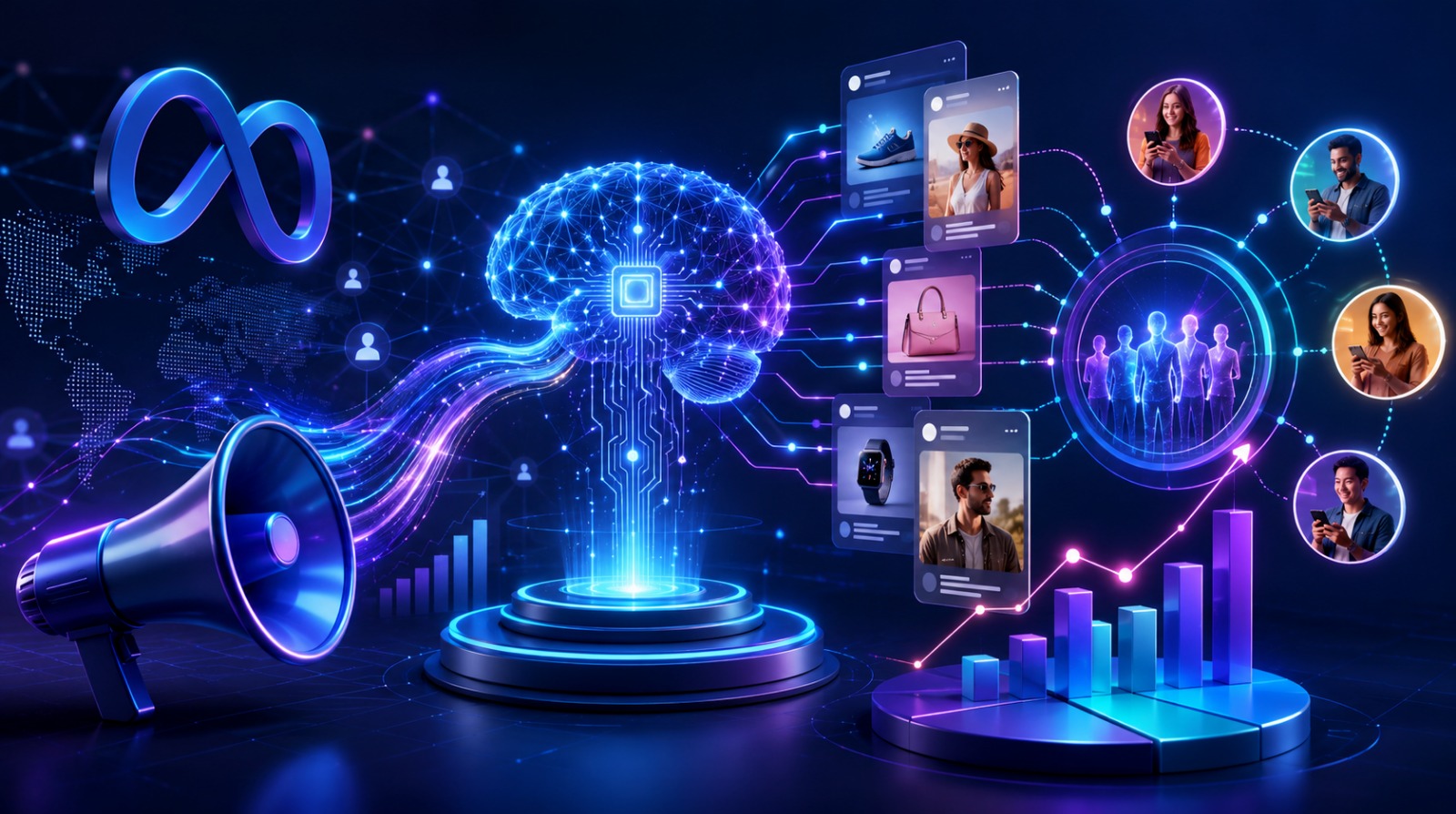
Meta AI Advertising in 2026
How Smarter Targeting Is Changing Digital Campaigns
Digital advertising has changed many times over the last decade, but the next shift is happening faster than most brands expected. By 2026, Meta’s AI-driven advertising tools are expected to move far beyond traditional targeting methods. Instead of relying on fixed audiences or manual campaign setups, advertisers are beginning to work with systems that can learn, adapt, and personalize ads in real time.
For many businesses, this marks a clear transition from manual campaign management to AI-assisted decision-making. The focus is no longer just on who the customer is, but on how that person behaves, what they engage with, and how their interests change from moment to moment.

The End of Static Targeting
Traditional digital advertising relied heavily on demographics. Marketers would select audiences based on age, gender, location, or general interests. While this method worked for years, it often missed the deeper details that actually drive purchasing decisions.
Two people in the same age group can have completely different tastes, habits, and motivations. One may respond to visual storytelling, while another reacts to practical product information. Static audience groups rarely captured these differences.
Meta’s AI systems are shifting the focus from demographics to behavior. Instead of building audiences based on fixed categories, the technology analyzes signals such as:
- Content engagement
- Browsing activity
- Purchase patterns
- Time spent on specific posts or videos
- Interaction history with brands
This approach allows campaigns to respond to what users are doing right now, not just who they are on paper.
From Manual Campaigns to AI-Built Ads
One of the biggest changes in Meta’s advertising ecosystem is automation. Modern AI tools can build and optimize entire campaigns using only a few inputs.
Instead of manually creating multiple ad versions, selecting audiences, and adjusting bids, advertisers can now provide:
- A product image or video
- A short description
- A budget
- A campaign objective
From there, the AI can generate multiple ad variations, test them across different audiences, and adjust performance in real time. It selects which creative works best, where to show it, and how much to bid for each impression.
This process reduces the time spent on manual optimization and allows businesses to focus more on strategy, branding, and customer experience.
Real-Time Personalization at Scale
Perhaps the most significant advantage of AI-driven advertising is the ability to personalize ads at scale.
Instead of showing the same message to everyone, AI systems can create thousands of variations of the same campaign. Each user may see a slightly different version of the ad based on their behavior and preferences.
For example:
- A frequent online shopper may see a fast-paced, product-focused ad.
- A new user might see a storytelling-based creative that builds trust.
- Someone who recently engaged with similar content could receive a reminder-style message.
This level of personalization makes ads feel more relevant and less intrusive. When people see content that matches their interests, engagement naturally improves.
Smarter Budget and Bid Adjustments
Advertising performance can change quickly. Competitor activity, seasonal demand, and user behavior all influence results. In the past, marketers had to monitor campaigns constantly and make manual adjustments.
AI systems now handle these changes automatically. They can:
- Shift budgets toward better-performing audiences
- Adjust bids based on competition
- Pause underperforming creatives
- Promote high-converting ad variations
These adjustments happen in real time, which helps campaigns stay efficient without constant manual oversight.
Continuous Learning and Optimization
One of the most powerful aspects of AI advertising is its ability to learn continuously. Every interaction, click, or conversion becomes new data that improves future performance.
Instead of resetting campaigns or rebuilding audiences from scratch, AI models refine their predictions over time. They learn which user types convert faster, which creatives perform better, and which placements deliver stronger results.
This ongoing learning process allows campaigns to improve naturally as more data becomes available.
What This Means for Businesses
For brands and small businesses, AI-driven advertising offers several practical benefits:
Less manual work
Campaign setup and optimization require fewer daily adjustments.
More accurate targeting
Ads reach people based on real behavior, not just assumptions.
Better use of the budget
AI directs spending toward the most effective audiences and creatives.
Faster campaign improvements
Real-time adjustments help avoid wasted ad spend.
However, automation does not remove the need for human input. Clear goals, strong creative assets, and a defined brand message are still essential. AI performs best when it has quality materials and precise objectives to work with.
The New Role of the Marketer
As AI handles more technical tasks, the role of the marketer is evolving. Instead of focusing on manual targeting and bid adjustments, marketers are becoming:
- Creative strategists
- Brand storytellers
- Data interpreters
- Customer experience designers
The human role shifts from operating the tools to guiding the campaign's direction.
Looking Ahead to 2026
By 2026, AI-powered ad systems are expected to become the standard rather than the exception. Campaigns will rely more on real-time data, predictive models, and automated creative testing.
For businesses, this means fewer technical barriers and more opportunities to run effective campaigns with smaller teams and budgets. For consumers, it means ads that feel more relevant and less random.
The future of advertising is not just about reaching people. It is about understanding them in real time and delivering messages that actually match their needs.


