

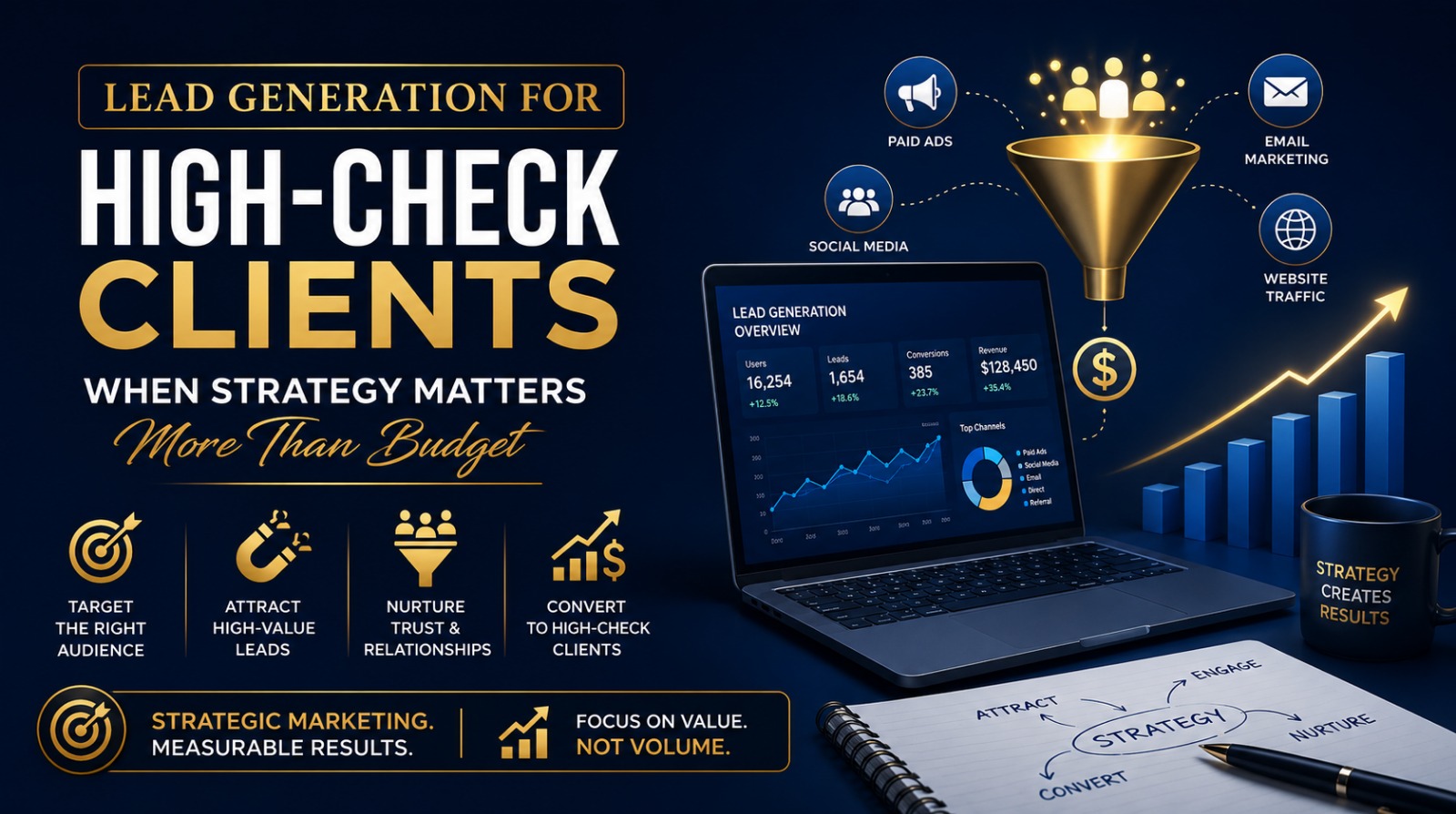
Lead Generation for High-Check Clients
When Strategy Matters More Than Budget
Running lead generation for high-end services is very different from selling everyday products. When one event can cost over $50,000, the client’s mindset, behavior, and decision process change completely. This becomes especially clear when working with premium, visual businesses like luxury floral design for events.
Recently, a lead generation campaign was launched for a high-end floral events business in the Los Angeles area. The goal was simple on paper: generate website leads from people who want to schedule events. But in practice, the results showed how sensitive and complex this type of campaign really is.
The campaign was set up with a “Leads” objective, using event scheduling as the conversion action. A modest daily budget of $40 was chosen to test performance. After spending around $65, the campaign still hadn’t generated a single lead. On the surface, it looked like a technical or performance issue. In reality, it was a strategic one.

High-Value Services Don’t Behave Like Regular Lead Campaigns
For businesses offering services worth tens of thousands of dollars, users rarely behave impulsively. They don’t click on an ad, land on a website, and immediately book a call. Especially in creative industries, trust and emotional connection come first.
In this case, the business already had success with message-based campaigns. People were comfortable writing on Instagram, asking questions, and starting conversations. That alone tells us something important: the audience prefers human interaction over forms and landing pages.
When the same audience was pushed toward a website scheduling action, friction appeared. Not because the offer was bad, but because the channel didn’t match user behavior.
Targeting Wealth Is Not Enough
The targeting strategy focused on affluent areas of Los Angeles and nearby regions: Orange County, Beverly Hills, Calabasas, and Glendale, with a specific cultural focus where relevant. The age range was 24–45, aimed at people planning weddings and large events.
On paper, this targeting made sense. These areas have money. These people plan events. But high-check targeting isn’t only about geography and demographics.
A broader insight emerged: over-narrow targeting can limit learning. When budgets are small and audiences are tight, platforms struggle to optimize. A wider Los Angeles + suburbs approach allows the algorithm to find patterns on its own — especially when creative does the heavy lifting.
Instead of slicing audiences too much, separating creative by intent (weddings vs. other events) often works better. Let visuals and messaging filter the audience naturally.
The Website Wasn’t the Real Star
Another key realization was about the website itself. For this business, most real clients don’t come through the site. They come from Instagram and direct contact DMs or phone calls.
That’s not a weakness. That’s a signal.
Floral design is deeply visual. People want to see the work, feel the style, imagine their own event. Instagram already does this perfectly. Asking users to leave that environment, go to a website, and schedule immediately may simply be too big a step, especially for premium services.
In this context, the website isn’t the conversion engine. Instagram is.
Choosing the Right Channel Is the Strategy
One of the strongest conclusions from this campaign was simple but powerful: Instagram is the best channel for this kind of service.
Not because it’s trendy — but because it matches how people make decisions for luxury, visual experiences. They scroll, save, share, message, and slowly build trust. Only after that do they commit.
Trying to force website lead generation too early can kill momentum. For high-check businesses, especially in creative industries, conversations often outperform forms.
The Real Lesson
This campaign wasn’t a failure. It was clarity.
It showed that:
- High-value services need a behavior-based strategy, not just targeting
- Message campaigns can outperform website leads for premium offers
- Visual trust matters more than fast conversions
- Broader targeting + strong creative often beats narrow assumptions
- The best funnel is the one your audience already uses
Lead generation isn’t about choosing the “correct” objective inside an ad platform. It’s about understanding how real people behave when real money is involved.
And when checks are high, patience, trust, and the right channel matter far more than daily budget size.


