

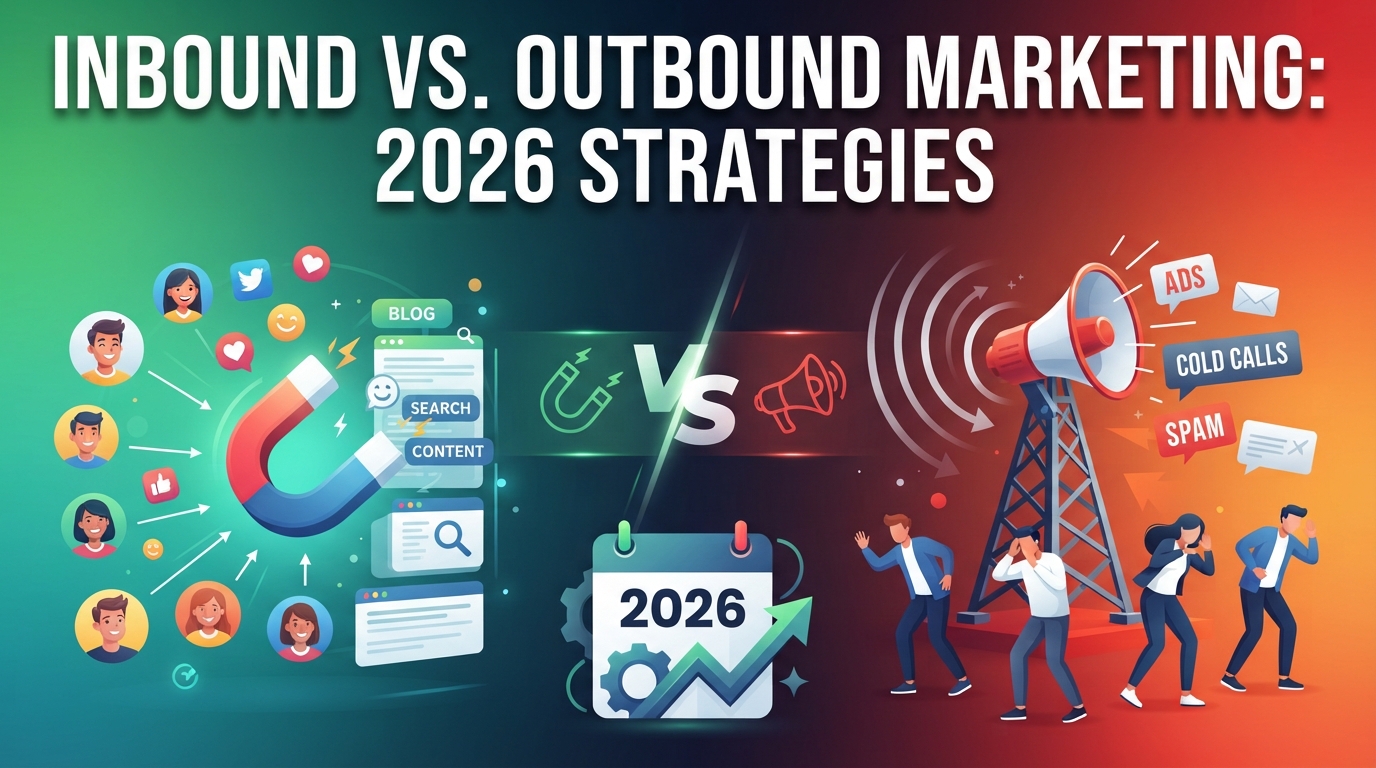
Inbound Marketing vs. Outbound Marketing: Which Works Better in 2026?
Marketing has changed a lot in recent years. People can research businesses, compare prices, read reviews, and watch videos before they ever talk to a salesperson.
Because of this, businesses need to think carefully about how they reach potential customers.
Two common approaches are inbound marketing and outbound marketing. Both can help a business grow, but they work in very different ways.
Inbound focuses on attracting people who are already interested in a problem, product, or service. Outbound focuses on actively putting your message in front of potential customers through advertising, outreach, and other promotional methods.
So, which one works better in 2026?
The answer depends on your goals, audience, budget, and sales process. In many cases, the best strategy is not choosing one over the other. It is finding the right mix.
What Is Inbound Marketing?
Inbound marketing is a strategy that attracts potential customers by giving them useful information and experiences.
Instead of interrupting someone with a sales message, you create content or experiences that help them find your business when they are looking for answers.
Common inbound tactics include:
- Search engine optimization (SEO)
- Blog content
- Educational videos
- Social media content
- Email marketing
- Guides and ebooks
- Case studies
- Helpful website pages
- Online resources
For example, imagine someone searches Google for "how much does a kitchen remodel cost?"
A remodeling company that has a helpful article answering that question could attract that person to its website. The visitor may then explore the company's services, read reviews, and eventually request a quote.
That is the basic idea behind inbound: attract, educate, build trust, and convert.
What Is Outbound Marketing?
Outbound marketing takes a more direct approach.
Instead of waiting for customers to find your business, you actively put your message in front of them.
Examples include:
- Google Ads
- Meta advertising
- Display advertising
- Direct mail
- Cold email
- Sales outreach
- Traditional advertising
- Sponsored content
- Retargeting campaigns
For example, a local dental practice can run paid ads targeting people searching for dental services in its area.
Outbound marketing can be especially useful when a business wants to reach a specific audience quickly.
Inbound vs. Outbound Marketing: The Main Difference
The biggest difference is how the customer is reached.
Inbound marketing attracts customers.
Outbound marketing reaches out to customers.
Inbound often begins with a question or problem. A person searches for information and discovers your brand.
Outbound usually begins with the business. The company chooses an audience and delivers an offer or message to that audience.
Neither approach is automatically better.
The right choice depends on what you are trying to accomplish.
Benefits of Inbound Marketing
Inbound can be powerful because it focuses on helping customers before asking them to buy.
It Builds Trust
Useful content can show potential customers that your business understands their problems.
A detailed guide, helpful video, or informative website can answer questions before a sales conversation takes place.
It Can Generate Long-Term Traffic
A good blog post or search-optimized page can continue attracting visitors after it is published.
This makes content and SEO valuable long-term marketing assets.
It Supports the Customer Journey
Not everyone is ready to purchase immediately.
Someone may first discover your brand, then read several articles, follow you on social media, join your email list, and eventually become a customer.
Inbound content can support each stage of that journey.
It Can Improve Lead Quality
When someone finds your business while actively searching for a solution, they may already have a strong interest in your product or service.
That can make inbound leads valuable for businesses with longer buying cycles.
Benefits of Outbound Marketing
Outbound marketing also has important advantages.
It Can Produce Faster Results
Paid advertising can put your business in front of potential customers quickly.
This can be useful when launching a new service, promoting an offer, or trying to generate leads within a specific time period.
You Can Target Specific Audiences
Modern advertising platforms provide many targeting options.
Businesses can target audiences based on location, interests, demographics, search behavior, and other signals.
This allows marketers to control who sees an advertisement and where it appears.
It Can Scale
Once you find an advertising campaign that produces profitable results, you can often increase its reach by adjusting the budget and targeting.
Of course, scaling should be done carefully. Spending more money does not automatically mean generating more profitable customers.
Which Is More Cost-Effective?
This is one of the most common questions businesses ask.
The answer depends on the campaign and business model.
Inbound marketing can require more time upfront. Creating quality content, improving SEO, and building an audience takes consistent effort.
Outbound marketing can require more direct spending, especially when using paid advertising.
However, cost should not be measured only by how much you spend.
A better question is:
How much does it cost to acquire a customer?
For example, a campaign that costs $2,000 but generates $10,000 in profitable sales may be more valuable than a $500 campaign that generates very little revenue.
Track metrics such as:
- Cost per lead
- Customer acquisition cost
- Conversion rate
- Revenue
- Return on ad spend
- Lead quality
These numbers provide a clearer picture of performance.
Why Businesses Should Consider Using Both
For many businesses, inbound and outbound work better together.
Imagine a potential customer sees your Facebook ad and visits your website.
They do not purchase immediately.
Later, they search for your company on Google and read several helpful articles. They then see a retargeting ad, return to your website, read customer reviews, and submit a contact form.
Which marketing channel generated the customer?
It may be difficult to credit just one.
This is why businesses should think about the entire customer journey rather than treating each channel as an isolated activity.
Outbound can create awareness and bring people into your marketing funnel.
Inbound can educate those people, build trust, and help move them toward a decision.
How to Choose the Right Strategy
Consider these questions before deciding where to invest your marketing budget.
How Quickly Do You Need Results?
If you need leads quickly, paid advertising and other outbound tactics may be useful.
If you are building long-term organic traffic, inbound tactics such as SEO and content marketing can be a strong investment.
How Do Your Customers Search?
If your customers frequently search Google for answers or services, inbound marketing can be especially valuable.
If you need to reach people who may not yet know your brand, outbound advertising can help introduce your business.
What Is Your Budget?
A smaller business may want to combine affordable content creation with carefully targeted paid campaigns.
The important thing is to invest where you can measure meaningful results.
How Long Is the Buying Process?
For a simple purchase, an advertisement may be enough to generate a conversion.
For a more expensive service, customers may need several interactions before they are ready to buy. In that case, a combination of content, email, social media, advertising, and strong website pages may work better.
How Friday Marketing Can Help
Creating a successful marketing strategy requires more than choosing between inbound and outbound.
Your website, advertising, content, social media, creative assets, and measurement should all support the same business goals.
Friday Marketing brings together data, creativity, and technology to help businesses grow. The agency offers services including paid advertising, content creation, social media marketing, website design and development, and branding.
For businesses looking for digital marketing services Beverly Hills, this type of full-service approach can make it easier to manage different channels while keeping the overall strategy connected.
Friday Marketing also focuses on measurable marketing outcomes rather than treating individual channels as separate activities. Its website highlights work across industries and more than 90 global projects.
Build a Marketing Strategy That Works Together
The inbound-versus-outbound debate does not have to be an either-or decision.
Inbound can help your business attract, educate, and build relationships with potential customers. Outbound can help you reach new audiences, create awareness, and generate faster traffic or leads.
The strongest strategy is often the one that combines both approaches based on your goals.
If you are looking for Internet marketing services Beverly Hills or a full service digital marketing Beverly Hills partner, Friday Marketing can help bring your paid, content, social, and website efforts together into a more complete growth strategy.
Frequently Asked Questions
What is the difference between inbound and outbound marketing?
Inbound marketing attracts potential customers through useful content, SEO, social media, and other helpful resources. Outbound marketing actively reaches potential customers through advertising, sales outreach, and promotional campaigns.
Is inbound marketing better than outbound marketing?
Not necessarily. The best approach depends on your audience, goals, budget, industry, and sales cycle. Many businesses can benefit from combining both strategies.
Is inbound marketing still effective in 2026?
Yes. Search, useful content, social media, email, and other inbound channels can help businesses attract people who are actively researching solutions. The key is creating useful content that meets real customer needs.
Is outbound marketing still effective?
Yes. Paid advertising, retargeting, sales outreach, and other outbound tactics can help businesses reach targeted audiences and generate awareness or leads.
How long does inbound marketing take to work?
Results vary by channel. SEO and content marketing can take time to build, while social content and email may produce results sooner. Consistency and quality are important.
How quickly can outbound marketing generate leads?
Outbound campaigns, especially paid advertising, can begin generating traffic and leads soon after launch. However, performance depends on factors such as targeting, offer, creative, landing page quality, and competition.
Should a small business use inbound and outbound marketing together?
Often, yes. Outbound can help bring new people into the marketing funnel, while inbound content can educate those prospects and build trust. Using both can create a more complete customer journey.
How can I measure whether my marketing strategy is working?
Track business-focused metrics such as qualified leads, sales, customer acquisition cost, conversion rate, revenue, and return on ad spend. These metrics are generally more useful than likes or impressions alone.


