

Gemini Ads: What Marketers Need to Know About Google’s AI Advertising
Google advertising is changing quickly. Search is becoming more conversational, people are using AI to discover information, and advertisers have more automation tools than ever.
At the center of many of these changes is Gemini, Google’s family of AI models.
You may have heard marketers talk about Gemini ads, AI-powered Search, or AI Max for Search campaigns. But what does all of this actually mean for a business that wants more customers from Google?
The short answer is that Google is moving toward advertising that can understand more context, create more relevant ad assets, and respond to how people search today.
For businesses, this creates new opportunities — but it also makes strategy more important.
What Are Gemini Ads?
The term Gemini ads is often used to describe advertising experiences and tools powered by Google’s Gemini AI models.
It is important to understand that Gemini is not simply a new campaign type that you switch on inside Google Ads. Instead, Google is bringing Gemini-powered intelligence into different parts of its advertising ecosystem.
That includes Search, creative development, campaign optimization and newer ad experiences designed for AI-driven Search.
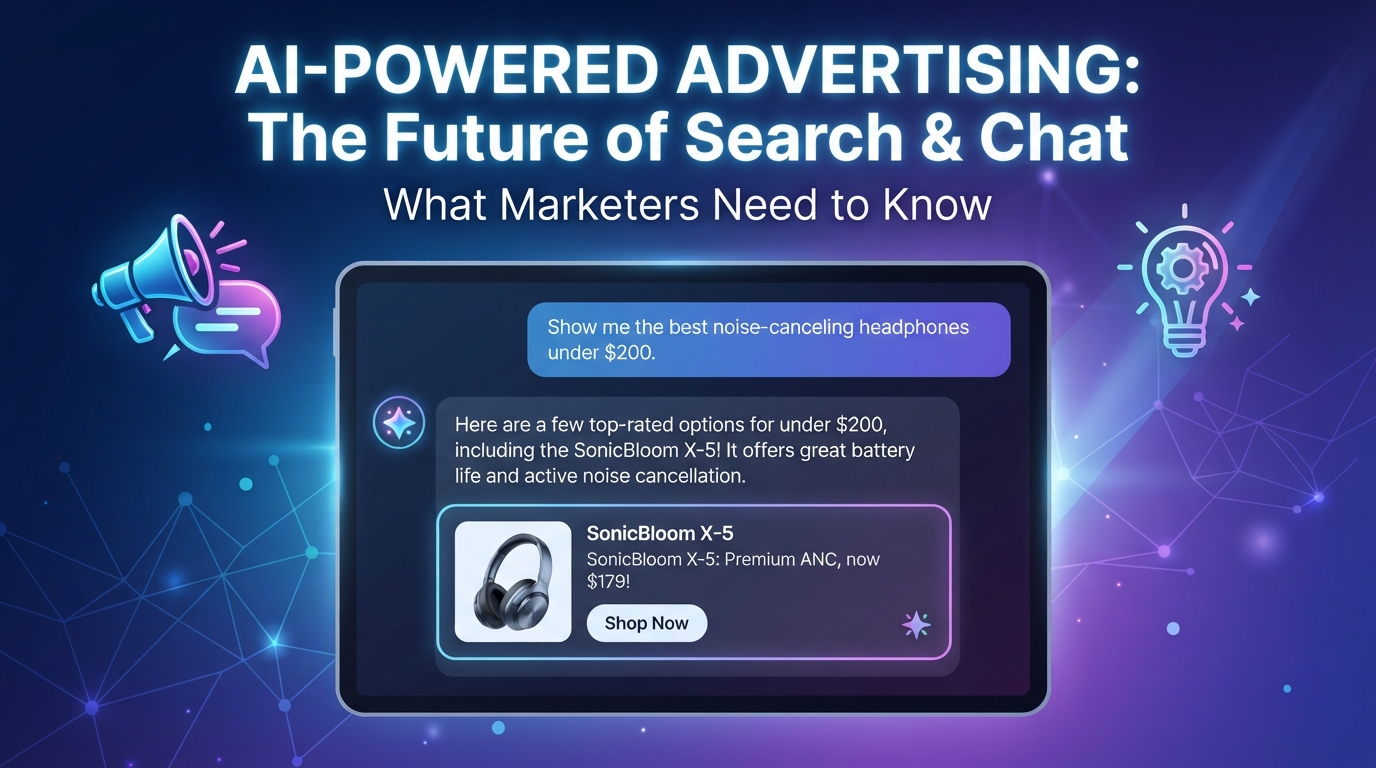
In 2026, Google announced new ad formats built with Gemini for Search, including conversational experiences designed to make ads feel more useful within AI-powered interactions.
So, rather than thinking of Gemini ads as one single product, it is better to think of them as part of Google's wider move toward AI advertising.
How Gemini Is Changing Google Advertising
Traditional advertising often relies on marketers manually deciding:
- Which keywords to target
- Which headlines to write
- Which audiences to reach
- Which landing pages to use
- Which creative variations to test
AI can help automate parts of this work.
Google's AI Max for Search campaigns, for example, uses AI to improve search-term matching, text customization, and final URL expansion. Google describes AI Max as an optimisation layer for existing Search campaigns rather than a separate campaign type.
This matters because people do not always search using the exact words marketers expect.
Someone looking for a local dental clinic might search:
"dentist open Saturday near me"
Another person might search:
"where can I get an emergency dentist this weekend?"
The intent may be similar even though the wording is different.
AI-powered advertising can use more context to help connect relevant searches with suitable ads and landing pages.
Gemini and Google Search Ads
Google Search Ads remain a major part of paid search, but the way those ads are created and matched is becoming more automated.
AI Max can expand search-term matching and use AI to create or customise headlines and descriptions based on factors such as the website, landing page, existing ads, and keywords.
This does not mean keywords no longer matter.
It means marketers need to think beyond individual keywords and focus more heavily on:
- Search intent
- Business goals
- Landing-page relevance
- Conversion data
- Brand messaging
- Audience needs
- Quality creative
For businesses running Google Search Ads, this shift can provide more opportunities to reach people whose searches do not perfectly match a manually selected keyword.
At the same time, greater automation means advertisers need strong controls and monitoring.
What Makes Gemini-Powered Advertising Different?
One of the biggest changes is the amount of context AI can process.
Instead of looking at a search query in isolation, Google's newer AI systems can use broader signals to understand what a person may be trying to accomplish.
This can influence both targeting and creative.
For example, imagine a company selling high-end kitchen renovations.
A traditional campaign might target terms such as:
- kitchen renovation company
- kitchen remodeler
- custom kitchen design
AI-powered systems can potentially identify additional searches that show similar commercial intent.
The benefit is not simply getting more traffic. The goal is finding more relevant opportunities.
Google says AI Max is designed to help advertisers expand reach while maintaining controls around areas such as brand and URL settings.
AI Can Also Help Create Ad Creative
Gemini's role is not limited to targeting.
Google is also expanding AI tools that help advertisers create assets.
Google's 2026 updates to Asset Studio introduced AI-powered capabilities for generating and refining creative assets based on a marketing brief, brand guidelines, website and goals. Google also announced the integration of its multimodal Gemini technology for video asset creation.
For smaller businesses, this could reduce some of the time needed to produce multiple creative variations.
But faster production does not automatically mean better advertising.
A business still needs a clear message, strong offer and understanding of its audience.
AI can help create variations. Strategy decides which ideas are worth creating in the first place.
What This Means for Small and Local Businesses
AI advertising may sound like something designed only for large brands with huge budgets.
It is not.
Local businesses can also benefit from smarter campaign systems, especially when they have clear conversion goals and useful website content.
For example, a local service business may want to reach customers searching for a service in Glendale or Beverly Hills.
A strong Google Ads Agency Glendale strategy should not focus only on increasing clicks. It should connect targeting, ad messaging, landing pages and conversion tracking.
The same principle applies whether a business works with a paid advertising agency, manages campaigns internally, or uses a broader digital advertising agency Glendale.
The technology can automate more of the process, but the fundamentals still matter.
Does Gemini Mean Marketers No Longer Need to Manage Campaigns?
No.
In fact, strategy and oversight may become even more important.
When more campaign decisions are automated, marketers need to understand what the system is trying to achieve and whether the results support the business.
Good campaign management still involves questions such as:
Are the right customers converting?
Traffic alone is not enough.
A campaign can generate thousands of clicks and still perform poorly if those visitors are unlikely to become customers.
Is the messaging accurate?
AI-generated headlines and descriptions should be reviewed to make sure they reflect the actual service, pricing, offers and brand voice.
Are landing pages relevant?
Sending every user to the homepage may not be the best experience.
The landing page should match the search intent and make the next step clear.
Are conversions being tracked correctly?
AI systems need useful signals.
If tracking is incomplete or inaccurate, automated optimisation can work from poor information.
This is why performance marketing services Beverly Hills and other data-driven approaches need to look beyond impressions and clicks.
Gemini Ads and the Future of Paid Search
Google's direction is clear: advertising is becoming increasingly AI-driven.
At Google Marketing Live 2026, Google announced new ad experiences built with Gemini for AI-powered Search, alongside broader AI tools across Search, YouTube and commerce.
Google has also continued expanding AI Max beyond its original Search use cases.
That means marketers should expect continued changes in how ads are matched, created and displayed.
The businesses that adapt well will not necessarily be the ones that automate everything.
They will be the ones that combine automation with:
- Strong offers
- Clear positioning
- Useful landing pages
- Accurate conversion data
- Good creative
- Regular testing
- Human oversight
In other words, AI changes the tools, but marketing fundamentals still drive the strategy.
How Businesses Can Prepare for Gemini-Powered Advertising
You do not need to rebuild your entire advertising strategy overnight.
Start with the basics.
1. Improve your website.
Make sure Google can clearly understand what your business offers, who it serves and where it operates.
2. Review your conversion tracking.
Know which actions actually matter, such as calls, bookings, purchases or qualified leads.
3. Build strong creative.
Give AI useful brand information, offers, and messaging to work with.
4. Focus on search intent.
Think about what customers are trying to accomplish rather than only the keywords they type.
5. Test before scaling.
Automation can help campaigns grow, but you still need to understand what is producing profitable results.
6. Keep an eye on Google's updates.
AI advertising is changing quickly. Campaign settings and capabilities that are useful today may evolve.
What Should Businesses Look for in an AI-Focused Ads Partner?
As Google Ads becomes more automated, choosing an advertising partner is less about finding someone who can simply launch a campaign.
Look for a team that understands strategy, creative, tracking and performance together.
A strong performance marketing agency should be able to explain what the campaign is trying to achieve, how success is measured and where the budget is going.
Likewise, effective Google Ads management in Beverly Hills should involve ongoing testing and optimisation rather than setting up campaigns and leaving them untouched.
The goal should always be business growth — not simply more automated activity.
How Friday Marketing Can Help
Friday Marketing Agency works across paid advertising platforms, including Google and Meta, with a focus on campaigns designed to turn advertising spend into real customer opportunities. The agency is a Google Partner and Meta Business Partner and offers paid advertising services from its Beverly Hills and Glendale locations.
For businesses exploring AI-powered Google advertising, the right approach is not to chase every new feature. It is to understand where AI can improve targeting, creative and campaign performance while keeping the overall strategy tied to business goals.
That is where an experienced advertising team can add value — helping you use new technology without losing sight of what actually drives results.
Frequently Asked Questions
What are Gemini ads?
Gemini ads refers broadly to Google's growing use of Gemini AI technology in advertising. It includes AI-powered ad experiences, creative tools and campaign optimisation features across Google's advertising ecosystem.
Are Gemini ads a new Google Ads campaign type?
Not exactly. Gemini powers different advertising features and experiences rather than being one standalone campaign type. For example, AI Max is an optimisation layer within Search campaigns.
Can Gemini create Google Search Ads?
Google already uses generative AI to help create and customise ad assets. AI Max includes text customisation that can generate additional headlines and descriptions based on campaign context.
Will AI replace Google Ads marketers?
AI is likely to automate more campaign tasks, but marketers still need to set goals, provide strategy, review creative, monitor results and make business decisions.
Should small businesses use AI advertising?
Potentially, yes. AI can help smaller businesses access more sophisticated targeting and creative capabilities, but campaigns still need accurate conversion tracking, relevant landing pages, and clear business goals.
How can businesses prepare for Google's AI advertising changes?
Start with strong foundations: accurate tracking, clear offers, useful website content, relevant landing pages, and good creative. Then test AI-powered campaign features while monitoring actual business results.


