

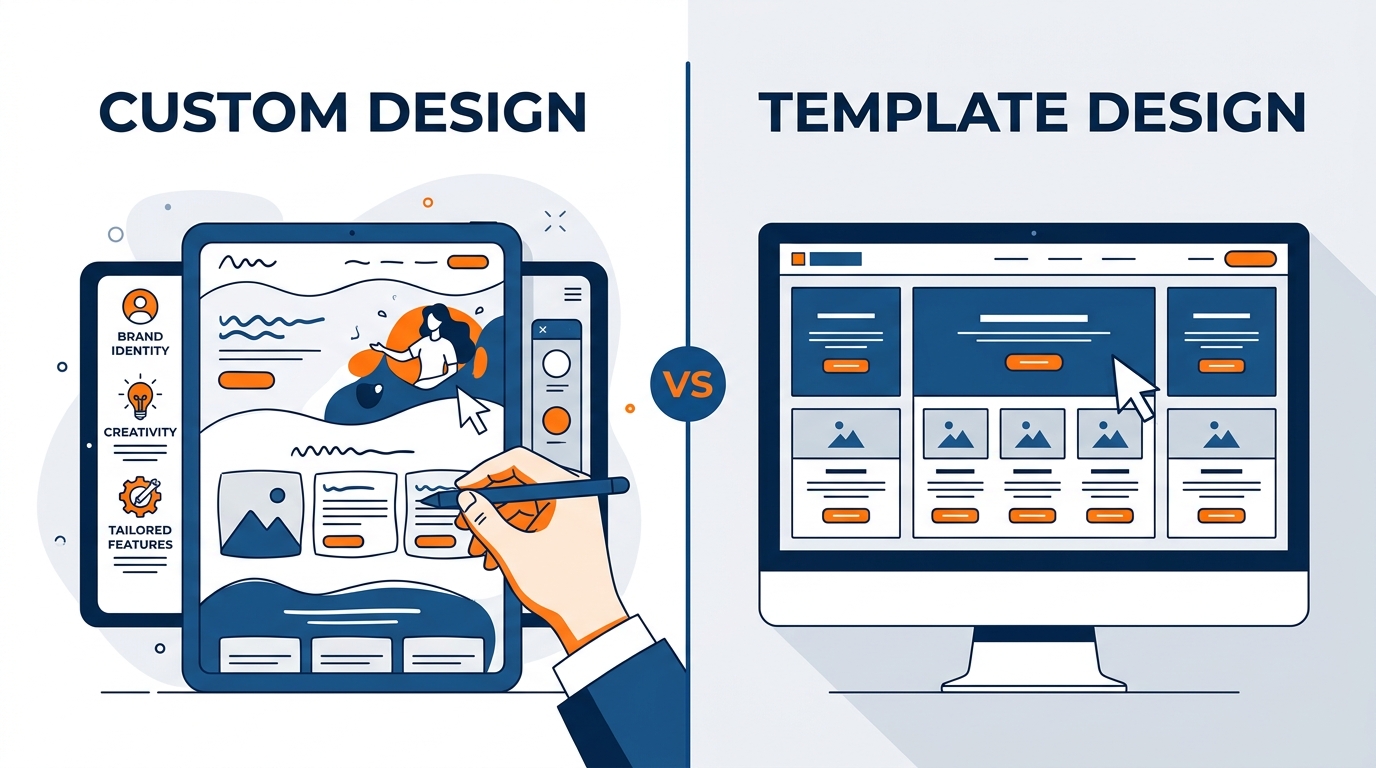
Custom Website Design vs. Template: Which Is Right for Your Business?
Custom web design creates a website specifically built around your brand, business goals, customer journey, and technical requirements. Template websites use pre-built layouts that can launch faster and cost less but may offer limited flexibility. Choosing between custom website design and templates depends on your budget, growth plans, performance needs, and the experience you want to provide customers.
What Is Custom Web Design?
A custom website is built around your specific business needs
Custom web design is the process of creating a website from the ground up instead of modifying an existing theme or pre-built layout.
A custom website typically includes unique:
- Website structure
- User interface design
- User experience design
- Branding elements
- Features and functionality
- Backend development systems
A custom website is designed specifically for your audience and business objectives. It allows developers and designers to create experiences that match how your customers search, interact, and convert.
For example, an eCommerce company may need custom product filtering, account systems, and checkout features. A service business may need advanced booking tools, customer portals, or integrations with third-party platforms.
Key takeaway: Custom web design gives you complete control over how your website looks, works, and grows.
What Is a Template Website Design?
Template websites use pre-built layouts for faster launches
A template website uses an existing design framework that can be customized with your branding, images, content, and colours.
Popular website platforms such as WordPress, a content management system used to create and manage websites, offer thousands of website templates and themes.
Template websites usually provide:
- Pre-designed page layouts
- Basic website features
- Faster development timelines
- Lower upfront costs
They are often suitable for small businesses, startups, portfolios, and businesses that need a simple online presence quickly.
However, templates may have limitations when you need advanced functionality, unique designs, or complex integrations.
Key takeaway: Template websites are practical for businesses that need speed and simplicity but may not support long-term customization.
How Does Custom Web Design Compare With Template Design?
Comparing the key differences between custom and template websites
The right choice depends on your business goals, technical requirements, and available resources.
Key takeaway: Custom websites provide more control and scalability, while templates provide speed and affordability.
Why Should You Choose Custom Web Design for Your Business?
Custom websites help you create a stronger digital experience
Your website is often the first interaction customers have with your business. A custom website allows you to create an experience that reflects your brand and guides visitors toward action.
A strong custom website can improve:
User experience design
User experience design (UX design) focuses on how visitors interact with your website. It considers navigation, page structure, accessibility, and conversion paths.
A custom approach allows designers to create journeys based on your specific customers.
Example:
A law firm may need visitors to quickly find practice areas and consultation forms. A restaurant may need menus, reservations, and location information easily accessible.
User interface design
User interface design (UI design) focuses on the visual elements users interact with, including:
- Buttons
- Typography
- Colour systems
- Layouts
- Interactive elements
Custom UI UX design helps create a consistent brand experience across every page.
Key takeaway: Custom design allows your website experience to match your customers instead of forcing your business into a generic layout.
When Is a Template Website a Better Choice?
Templates work well for businesses with simple requirements
A template website may be the right option if you:
- Need a website quickly
- Have a limited budget
- Require basic pages only
- Do not need complex features
- Are testing a new business idea
For example, a local consultant who needs a professional homepage, services page, and contact form may not require a fully custom website.
However, businesses planning long-term growth should consider whether the template can support future needs.
Key takeaway: Templates are useful for simple websites, but growing businesses may eventually need custom development.
What Role Does Website Development Play in Your Decision?
Development determines how your website performs and scales
Website development is the technical process of building, programming, and maintaining a website.
It includes:
- Front-end development
- Backend development
- Database management
- Website security
- Performance optimization
- Third-party integrations
Backend development focuses on the server-side systems that power website functionality, such as databases, user accounts, and business tools.
A custom website gives developers more freedom to build advanced systems that match your operational needs.
For businesses requiring:
- Customer dashboards
- Booking systems
- Membership platforms
- Advanced forms
- Software integrations
custom website development is often the stronger option.
Key takeaway: Website development choices directly affect your website’s flexibility, speed, and future growth potential.
Which Website Option Is Better for SEO and Business Growth?
Custom websites provide more control over search performance
Search engine optimization (SEO) depends on many factors, including website structure, page speed, content organization, mobile performance, and technical setup.
A custom website gives developers more control over:
- Website architecture
- Page loading speed
- Technical SEO settings
- Schema markup implementation
- Mobile responsiveness
- Conversion-focused layouts
Responsive web design ensures that a website automatically adapts to different screen sizes, including desktops, tablets, and smartphones. Google has emphasized mobile usability as an important factor for creating better search experiences.
Template websites can also perform well in search results when they are properly optimized. However, some templates may include unnecessary code, limited customization options, or design restrictions that affect performance.
Key takeaway: Both options can support SEO, but custom web design offers greater technical control for businesses focused on long-term growth.
How Do You Choose Between Custom Web Design and a Template?
Follow these steps before investing in website design services
Choosing the right website solution starts with understanding your business needs.
Step 1: Define your website goals
Identify what your website needs to achieve.
Ask yourself:
- Do you need more leads?
- Are you selling products online?
- Do customers need accounts or booking features?
- Are you building a long-term digital platform?
Why this matters: Your goals determine the level of design and development required.
Step 2: Evaluate your required features
List the functions your website needs today and in the future.
Consider:
- Forms and lead generation tools
eCommercefeatures- Customer portals
- Integrations
- Custom applications
Why this matters: Advanced features often require custom development.
Step 3: Consider your growth plans
Think about where your business will be in three to five years.
A template may work initially, but rapid growth may require additional functionality later.
Why this matters: Choosing a scalable website solution prevents expensive redesigns.
Step 4: Choose the right development partner
A professional web development agency or website design agency can help you evaluate the best approach.
Look for an agency with experience in:
- UI UX design
- Website development
- Responsive web design
- SEO-friendly development
- Business-focused strategy
Why this matters: The right partner helps turn your website into a growth tool instead of just an online brochure.
What Are the Common Mistakes Businesses Make When Choosing a Website?
Avoid choosing based only on upfront price
Many businesses select a website option based only on initial cost. While budget matters, other factors affect long-term success.
Common mistakes include:
- Choosing a template that cannot support future growth
- Ignoring user experience design
- Focusing only on appearance instead of conversions
- Not planning for SEO during development
- Selecting a platform without considering maintenance needs
A website should support your business objectives, not just look professional.
Key takeaway: The right website investment balances cost, functionality, user experience, and future growth.
Custom Web Design vs Template: Which Option Is Right for Your Business?
The best choice depends on your goals and requirements
Use this quick guide:
For businesses competing online, a website is more than a digital presence. It is a platform for attracting customers, building trust, and generating revenue.
Key takeaway: If your website is central to your business growth, custom web design usually provides more long-term value.
Watch-outs Before Choosing Your Website Design Approach
Important factors to consider before starting development
Before choosing between custom and template websites:
- Define your business goals first.
- Consider future growth, not only current needs.
- Prioritize user experience over visual design alone.
- Confirm whether your website will support SEO requirements.
- Choose a reliable website development partner.
A website should support your marketing strategy, customer experience, and business growth.
Final Thoughts: Should You Invest in Custom Web Design?
Build a website that supports your business goals
The choice between custom web design and templates depends on your timeline, budget, features, and growth plans.
Templates can be effective for businesses that need a simple online presence quickly. However, custom web design gives businesses greater control over branding, performance, functionality, and customer experience.
If your website plays an important role in generating leads and growing your business, investing in professional website design services can provide stronger long-term value.
Friday Marketing Agency helps businesses create strategic websites focused on design, performance, and growth.
Ready to build a website designed around your business goals? Contact Friday Marketing Agency to discuss custom web design, website development, and digital growth solutions.
Frequently Asked Questions About Custom Web Design
Is custom web design better than a template?
Custom web design provides more flexibility, scalability, and control, while templates are faster and more affordable. The better option depends on your business goals.
How long does custom website development take?
A custom website can take several weeks to several months depending on design complexity, features, content requirements, and approval processes.
Can template websites rank on Google?
Yes. A well-optimized template website can rank in search results, but custom websites often provide more technical SEO flexibility.
What does a website design agency do?
A website design agency creates and improves websites through strategy, UI UX design, development, branding, and performance optimization.
Should small businesses invest in custom web design?
Small businesses with growth goals, unique requirements, or strong competition may benefit from custom web design. Businesses with simple needs may find templates suitable.


