

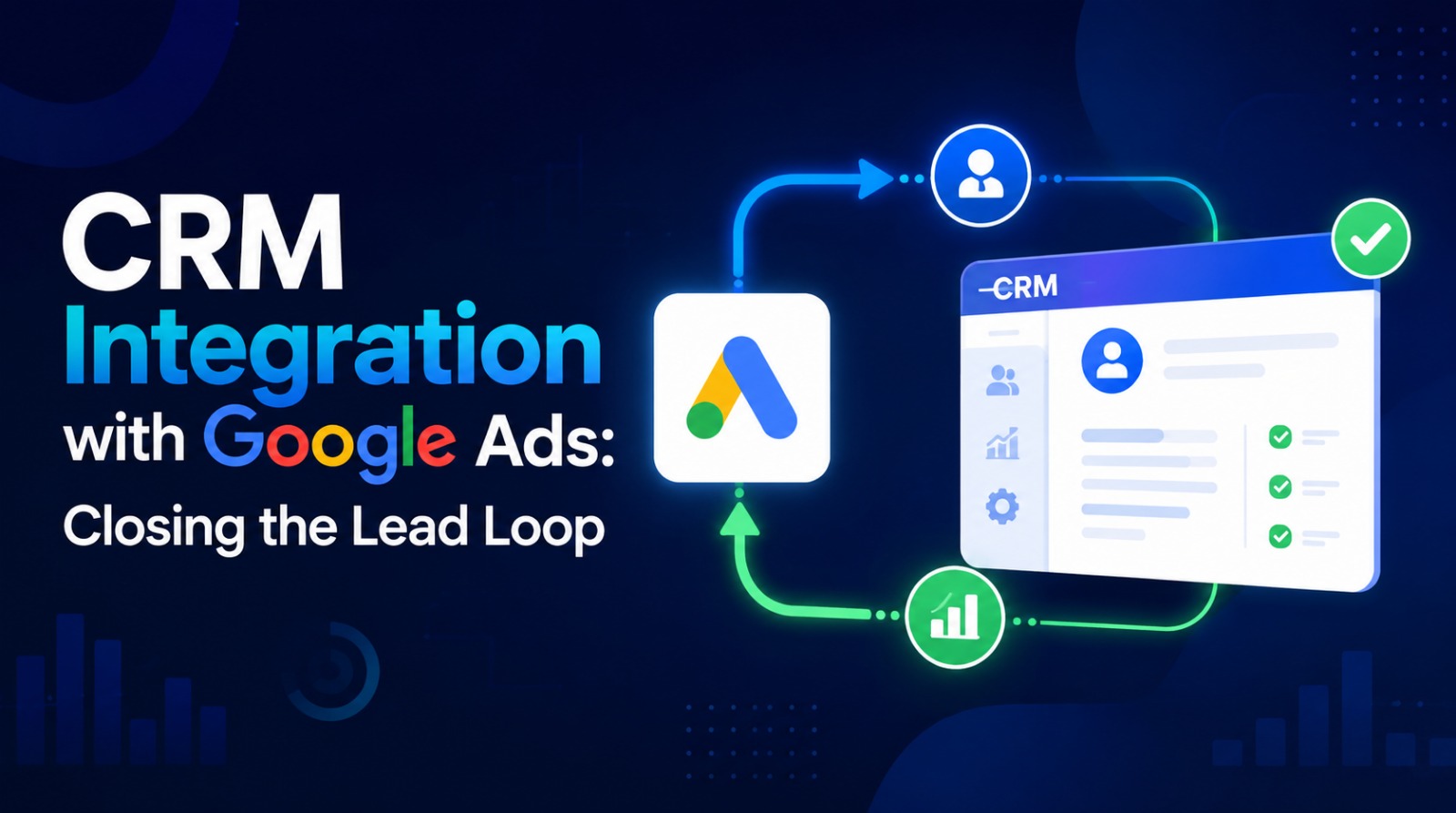
CRM Integration with Google Ads: Closing the Lead Loop
Why Your Campaigns Feel “Busy” but Not Always Profitable
There is a moment many business owners and marketing teams quietly experience but rarely talk about openly. You launch Google Ads, you start seeing leads come in, your inbox fills up, your phone rings more often than before, and everything looks like it is working. On the surface, it feels like growth.
But then something doesn’t fully add up.
Some leads never respond. Some are not the right fit. Some take weeks to close. Others disappear after the first conversation. And suddenly, you realize you are measuring activity, not actual results. You are counting leads, but not knowing which ones truly turn into revenue.
This is exactly where most campaigns lose clarity, and where real growth starts to slow down.
The missing piece is not more budget or more creatives. The missing piece is connection. More specifically, the connection between your CRM and your Google Ads.
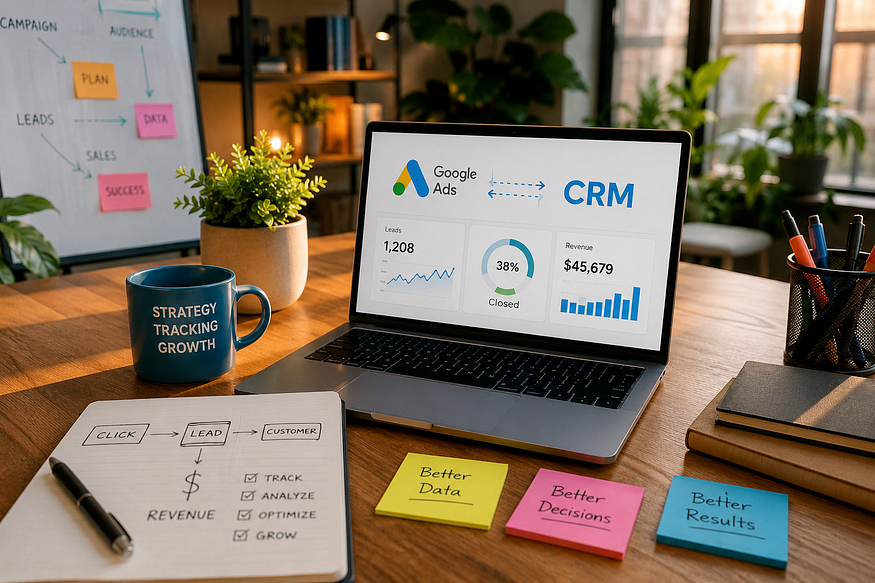
What Happens When Your CRM and Google Ads Don’t Talk to Each Other
Without proper CRM Google Ads integration and lead tracking, your campaigns are essentially working with incomplete information. Google Ads can tell you which keyword generated a form submission, but it cannot tell you if that lead became a paying client, how much that client was worth, or how long it took to close the deal.
This creates a gap that affects every decision you make.
You might increase budget on keywords that bring a high number of leads, without realizing that those leads rarely convert. At the same time, you might reduce spending on campaigns that bring fewer leads but higher-quality clients, simply because the surface data does not show their real value.
Over time, this leads to wasted ad spend, slower growth, and a constant feeling that something is missing even when the numbers look good.
Closing the Loop: Turning Clicks into Real Business Insights
When you connect your CRM with Google Ads, something shifts in a very practical and powerful way. You stop guessing and start seeing the full journey of each lead, from the first click to the final sale.
Through tools like HubSpot Google Ads integration, you can automatically track how leads move through your pipeline. You begin to understand which campaigns bring not just traffic, but real clients. You see patterns that were invisible before, such as which audience segments close faster or which services generate higher-value deals.
This is what “closing the lead loop” actually means. It is not just a technical setup. It is a new level of clarity in how your marketing performs.
Offline Conversion Import: The Missing Link Most Businesses Ignore
One of the most important parts of this process is something many businesses overlook, which is offline conversion import for Google Ads.
Not every conversion happens online. In fact, for many service-based businesses, the most important actions happen after the first contact. Phone calls, in-person consultations, signed contracts, and completed services are all part of the real conversion journey.
By importing offline conversions from your CRM back into Google Ads, you allow the platform to learn which leads actually turned into customers. This helps Google optimize your campaigns based on real outcomes, not just initial actions.
Over time, this improves targeting, bidding, and overall campaign performance in a way that simple lead tracking never could.
Using CRM Data to Build Smarter Audiences
Another powerful advantage of integrating CRM data with Google Ads is the ability to create more refined and meaningful audiences.
Instead of targeting broad groups or relying only on website visitors, you can use CRM data in Google Ads audience strategies to reach people who are similar to your best clients. You can retarget users who showed interest but did not convert, or exclude audiences that are unlikely to bring value.
This approach makes your campaigns feel less like advertising and more like a conversation with the right people at the right time.
Why This Matters More for Service-Based Businesses
For service-based businesses, where the sales cycle is longer and more personal, understanding the quality of leads is far more important than simply increasing volume.
A single high-value client can be worth more than dozens of low-quality leads. Without proper tracking, both can look the same in your dashboard.
CRM integration allows you to see beyond the first click and understand the real impact of your campaigns. It helps you focus on what truly drives revenue, not just what looks good in reports.
A More Honest Way to Measure Marketing
At the end of the day, marketing should not feel like a guessing game. It should feel clear, measurable, and aligned with your business goals.
When your CRM and Google Ads work together, you move from assumptions to insights. You stop asking “how many leads did we get?” and start asking “which campaigns actually brought clients?”
That shift changes everything.
📍 Los Angeles–based marketing agency


