

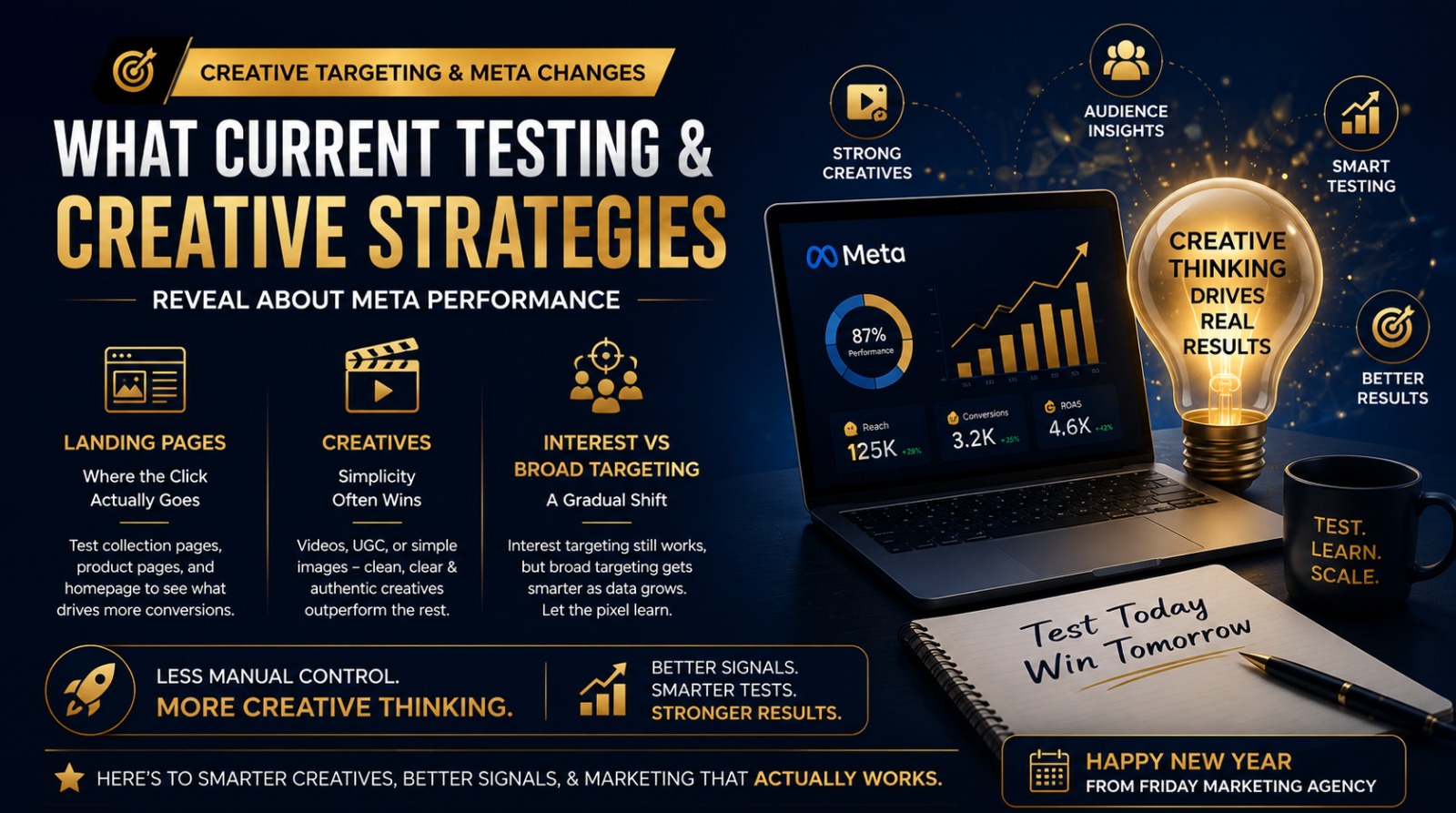
Creative Targeting and Meta Changes
What current testing and creative strategies reveal about Meta performance
A New Year Is the Right Time to Rethink Strategy
The start of a new year is always a moment to pause, look back, and rethink how we work. In digital marketing, especially on Meta, this habit is not just symbolic it’s necessary. Platforms change, algorithms evolve, and what worked confidently six months ago may already feel outdated today.
Over the past period, one thing has become very clear: creative targeting on Meta is going through a shift. Not a dramatic break, but a slow and meaningful transformation in how brands should approach testing, structure, and decision-making.

The Three Core Areas That Matter Right Now
At the moment, three main areas truly deserve attention and testing. These are not trends — they are fundamentals that directly affect performance.
Landing Pages: Where the Click Actually Goes
The first is landing pages. Many brands underestimate how much the destination matters. Testing a collection page versus a product page or even the main page can completely change performance.
Sometimes a clean, focused product page converts better. Other times, a broader collection page builds trust faster. There is no universal answer — and that’s exactly why testing matters more than assumptions.
Creatives: Simplicity Often Wins
The second key area is creatives. Videos, UGC, static images, different visual styles — this is where Meta is silently pushing advertisers to invest most of their energy.
The algorithm has become much better at finding people, but it still relies heavily on what you show them. Interestingly, simplicity often wins. Clean visuals, honest formats, and even “unexpected” creative ideas can outperform polished, overproduced ads.
Interest vs Broad Targeting: A Gradual Shift
The third area is targeting itself, especially the ongoing discussion between interest targeting and broad targeting.
In some cases, interest targeting still performs better, particularly when there have been pixel or data limitations in the past. But there is strong confidence that broad targeting becomes more powerful over time. As more data is collected, the pixel learns faster, smarter, and needs less manual control.
Less Manual Control, More Creative Thinking
This leads to an important mindset shift. Instead of spending most of the budget and energy trying to “outsmart” the algorithm with complex targeting, the focus slowly moves toward creative, landing page experience, and offering clarity.
The platform increasingly rewards advertisers who give it clean signals and strong creative input.
What Consistently Works for E-commerce
When it comes to e-commerce specifically, some creative formats continue to prove their value again and again.
Dynamic Product Ads, especially in simple carousel formats, consistently perform well. They are clear, familiar, and easy to understand for users. Even in competitive niches like electronics, these formats often outperform more experimental ideas.
When “Too Simple” Becomes Powerful
At the same time, creativity doesn’t always mean complexity. Sometimes the most unexpected things work.
A simple photo. A casual visual. Even something that looks almost “too simple” can grab attention and convert better than something that looks perfect. This is a reminder that users respond to authenticity, not polish.
Native-Looking Creatives Blend Better
Another interesting observation is how random-looking creatives can sometimes win. Ads that feel like social posts, short opinions, or casual product mentions similar to what you might see on Twitter or in everyday feeds — often perform better than static, traditional ads.
They blend into the user’s environment instead of interrupting it.
Testing Is No Longer Optional
All of these points to one clear conclusion: Meta advertising today is less about strict rules and more about smart experimentation.
Testing is no longer optional. Creative thinking is no longer a “nice to have.” And flexibility is more valuable than control.
A New Year's Message from Friday Marketing Agency
As we step into the new year, this is also a moment to say thank you.
From Friday Marketing Agency, we wish a successful, focused, and growth-driven New Year to our partners, clients, and everyone building businesses in a constantly changing digital space. May this year bring clearer strategies, stronger results, and the confidence to test new ideas instead of repeating old ones.
Looking Ahead
The platforms will continue to change that’s guaranteed. But brands that stay curious, creative, and data-driven will always find their way forward.
That’s the mindset we’re carrying into this new year.
Here’s to smarter creatives, better signals, and marketing that actually works.


